

Best Ties for Blue Suits That Always Work
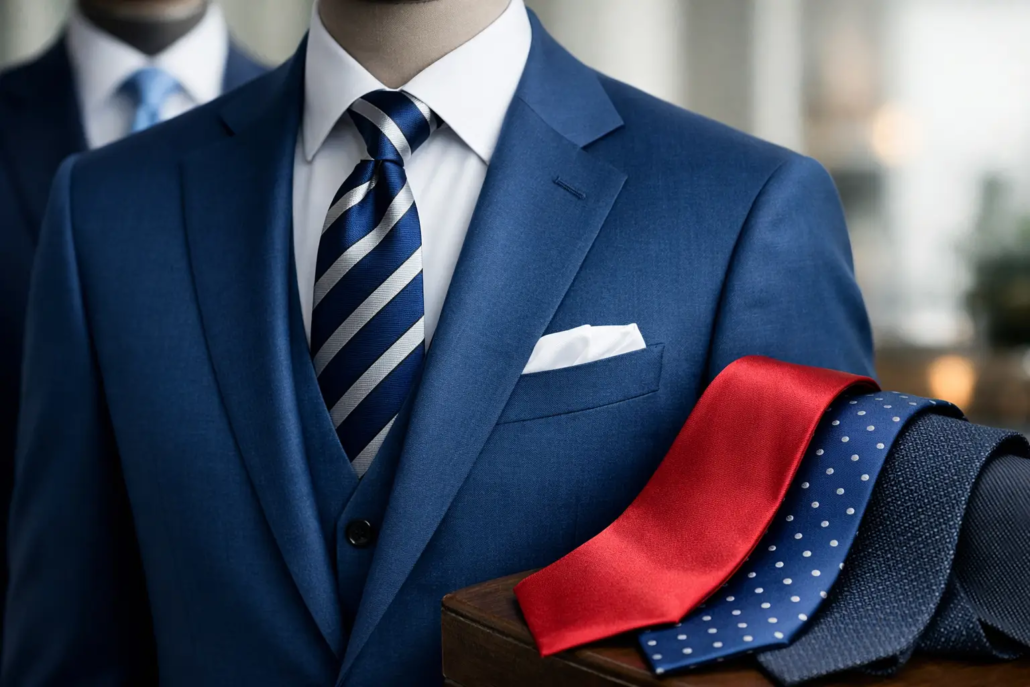
A blue suit earns its place in a man’s closet because it can cover almost everything: Monday meetings, Sunday services, job interviews, weddings, and date nights. The trick is choosing the tie that gives it the right direction. The best ties for blue suits do not merely match the jacket. They create enough contrast to look intentional while keeping the entire outfit polished.
Start with the shade of blue in your suit, then consider the occasion, your shirt, and the season. A navy suit can handle richer colors and stronger contrast. A lighter blue suit generally looks its best with softer tones, fresher patterns, and lighter fabrics. Once you understand that simple difference, building a dependable tie selection gets much easier.
Best Ties for Blue Suits by Color
Burgundy and red ties: the dependable first choice
If you own one blue suit and want one tie that will never leave you guessing, make it burgundy. A deep burgundy, wine, or oxblood tie brings warmth to blue and creates a classic contrast that works in nearly every formal setting. It is especially strong with navy suits, white shirts, and brown or black dress shoes.
Burgundy is a smart choice for interviews, presentations, church, and evening events because it feels confident without being loud. A brighter red tie has more energy and can work well for business settings, but it draws more attention. Choose a darker red when you want a refined look that will photograph well and stay appropriate from day to night.
Navy ties: subtle and polished
A navy tie with a blue suit creates a tonal look, meaning the colors sit close together. Done right, it looks sharp, modern, and professional. The key is separation. Pair a navy tie with a medium-blue or lighter-blue suit, or choose a tie with a woven texture, small pattern, or a noticeably darker shade than the suit.
With a dark navy suit, a plain navy tie can disappear unless the shirt and tie fabric provide contrast. A white shirt helps, but a navy tie with small dots, stripes, or a textured finish usually gives the outfit more definition. This is an excellent combination for conservative offices, formal dinners, and occasions where understated style is the goal.
Pink ties: clean contrast for work and weddings
Pink and blue are a natural pairing, particularly when the shirt is white or light blue. A pale pink tie feels fresh and approachable with a navy or medium-blue suit, making it a favorite for spring weddings, daytime celebrations, and business-casual offices. Deeper rose or dusty pink shades bring more sophistication and can carry into fall.
The trade-off is formality. Very light pink can feel relaxed beside a highly formal dark suit, while a muted rose silk tie has enough depth for a dressier event. If you are coordinating a wedding party, pink offers plenty of room to match seasonal flowers, bridesmaid dresses, and pocket squares without making every groomsman look identical.
Green ties: distinctive without trying too hard
Green ties are often overlooked, which is exactly why they can make a blue suit stand out. Forest green, emerald, and dark olive work particularly well with navy because they have enough richness to hold their own. These shades are ideal for fall weddings, holiday parties, and professional settings where you want something different from the usual red or blue.
For spring and summer, sage or lighter green can pair nicely with a lighter blue suit. Keep the shirt simple, usually white, so the color combination stays clean. Green is more distinctive than burgundy, so choose a solid or subtle pattern if you want the look to remain easy to wear.
Gray and silver ties: refined for formal occasions
A silver or charcoal tie is a strong match for a blue suit when the event calls for a more formal, coordinated appearance. Silver looks especially crisp with a navy suit and white shirt at evening weddings, receptions, graduations, and black-tie-optional events. A charcoal tie gives a more reserved result and is a reliable option for office wear or memorial services.
Watch the fabric here. Shiny satin can look great under reception lighting, but it may feel too glossy for a daytime business meeting. A matte silk, woven texture, or subtle geometric pattern brings the same color family into a more versatile setting.
Yellow and gold ties: bright, classic confidence
Gold, mustard, and yellow ties can look excellent with blue suits because warm yellow sits opposite blue on the color wheel. A rich gold tie is a natural choice for fall events, school functions, and celebrations. Mustard adds personality to navy without the brightness of a pure yellow.
Pale yellow is more traditional and works best for spring, Easter, and daytime events. The color should feel intentional, not fluorescent. If the tie is bright, balance it with a plain white shirt and a solid pocket square.
Match the Tie to Your Blue Suit Shade
A navy suit is the most flexible option. It pairs confidently with burgundy, dark green, gold, pink, gray, and patterned ties. Because the suit is dark, it can support a tie with a clear color contrast or a stronger print. It also makes a white dress shirt look especially crisp.
A medium-blue suit has an easy, versatile feel. Navy, burgundy, dusty pink, forest green, and medium-gray ties all work well. Avoid choosing a tie that is nearly the exact same blue as the suit unless it has visible texture or pattern. Too-close shades can make the outfit look flat.
A light-blue suit calls for a lighter hand. Soft pink, pale blue, light gray, lavender, sage, and small-scale floral patterns are all great choices. Dark burgundy and navy can work too, especially for evening events, but the contrast will be more dramatic. For daytime weddings or warm-weather occasions, lighter silk and linen-blend textures usually look more at home.
Pattern, Texture, and Width Matter Too
Color gets the first look, but pattern determines how formal or expressive the outfit feels. A solid silk tie is the most adaptable choice. It is the right answer when you are dressing for an interview, a formal wedding, or any event where you do not know the dress code well.
Small dots, subtle geometrics, and fine stripes add personality without competing with the suit. Striped ties work best when the shirt is solid. If you wear a checked or patterned shirt, keep the tie solid or choose a pattern that is clearly larger or smaller than the shirt pattern. Matching similar-size patterns is where outfits start to look busy.
Texture can do as much as color. A grenadine-style weave, knit tie, or matte textured silk makes a navy-on-navy outfit more interesting. Smooth silk is the classic choice for formalwear, while knit and woven ties are better suited to business-casual outfits, church, and smart weekend events.
Tie width should follow your jacket lapels and your build. Most men look best in a traditional width around 3 to 3.25 inches, especially with a classic blue suit. Skinny ties can look sharp with slim lapels and a modern fitted suit, but they are less versatile for formal weddings and conservative business settings. Extra-long ties are worth choosing when you need proper length and a balanced knot. A tie should reach the top of your belt buckle, not stop halfway above it.
Finish the Look Without Overmatching
A pocket square should complement the tie, not duplicate it. Rather than matching the exact burgundy or navy, choose a white pocket square or one that includes a small touch of the tie color. This gives the outfit depth and keeps it from looking like a pre-packaged uniform.
For shoes, medium and dark brown leather pair beautifully with most blue suits, especially navy and medium blue. Black shoes make the outfit feel more formal and are a safe choice with dark navy, gray, or silver ties. Keep your belt in the same color family as your shoes, and add a simple tie bar when you want a clean finishing detail.
When you need a tie for a specific suit, shirt, and event, seeing the colors together makes the decision easier. Tie One On offers traditional, skinny, extra-long, silk, patterned, and coordinating accessory options, so you can choose a look that fits the occasion rather than settling for the first color that seems close enough.
The right tie gives a blue suit a new job every time you wear it. Keep a burgundy solid, a textured navy, a versatile green or gray, and one lighter seasonal option in rotation, and you will be ready for nearly any invitation that comes your way.



Leave a Reply
Want to join the discussion?Feel free to contribute!