

What Is an Extra Long Tie and Who Needs One?
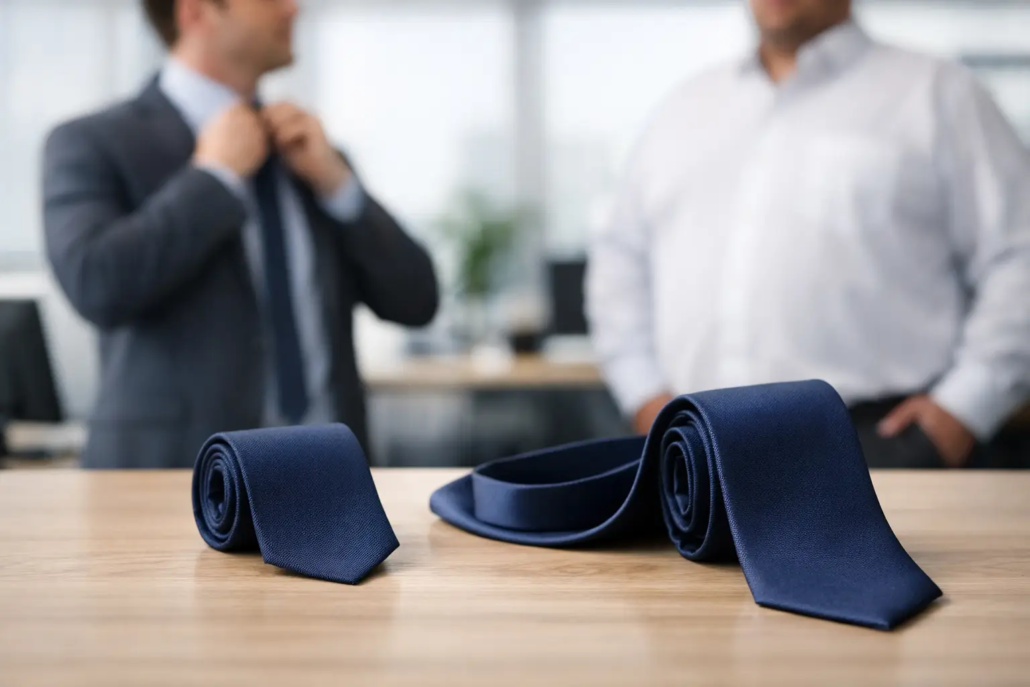
A tie that stops above your waistband can make an otherwise sharp outfit look unfinished. So, what is an extra long tie? It is a necktie made with additional fabric length, giving taller men, men with broader necks or chests, and anyone using a larger knot enough room to tie it properly and still reach the belt line.
The difference sounds small, but it changes how a tie wears. A proper tie should land near the center of your belt buckle, with the narrow tail shorter and tucked behind the wide blade. An extra long tie makes that balanced finish easier to achieve without pulling the knot too tight or leaving the wide blade awkwardly short.
What Is an Extra Long Tie?
Most traditional neckties measure roughly 57 to 58 inches from tip to tip. Extra long ties are commonly around 61 to 63 inches, although exact measurements vary by style and manufacturer. Those few additional inches are intended to create better proportions, not a longer-looking tie once it is on.
When an extra long tie is tied correctly, it should look just like a standard tie on someone who fits a standard length. The extra material is used in the knot, around the collar, and in the wrap that brings the wide blade down to the right spot. It is a fit solution, much like choosing the right shirt sleeve length or belt size.
Extra length is often paired with a traditional blade width, but it is available in a range of looks. You can find solid colors for the office, subtle patterns for church or business events, wedding-ready colors, silk options, novelty designs, and coordinating tie and pocket square sets. The right length should never force you to settle for a style that does not suit the occasion.
Who Should Wear an Extra Long Tie?
Height is the most common reason to choose an extra long tie. Men around 6 feet 2 inches and taller frequently need the added length, particularly when wearing a spread collar or a knot that uses more fabric. Still, height alone is not the full story.
A man of average height with a larger neck, broad shoulders, a fuller chest, or a wider midsection may also find that a standard tie comes up short. More fabric is used to travel around the collar and form the knot, leaving less for the visible front blade. The same can happen when a taller man wears high-rise trousers, since the waistband sits higher than it does with lower-rise pants.
Your preferred knot matters, too. A simple Four-in-Hand knot uses less fabric and can help a standard-length tie work for some men. A Half Windsor uses more, while a full Windsor uses significantly more. If you like a substantial, symmetrical knot, extra length gives you more flexibility.
The simplest test is visual: if your tie regularly finishes well above your belt buckle after you have tied it to a comfortable, proportional knot, an extra long tie is likely the better fit. Do not compensate by tying a tiny knot, wearing the tie too low, or letting the narrow tail hang longer than the front blade. Those workarounds tend to look less polished than choosing the correct length from the start.
Extra Long Does Not Mean Oversized
An extra long tie is not automatically wider, thicker, or more formal. It refers to the tie’s overall length. The blade width, fabric, pattern, and construction can still match the rest of your wardrobe and your body proportions.
That distinction matters when shopping. A broad-shouldered man may prefer a classic-width extra long tie, while a taller, leaner man may like a slimmer blade. The best choice depends on the lapel width of your jacket, the scale of your build, and the look you want. A narrower tie can look modern and clean, but an extremely skinny blade may feel out of proportion with a broad suit lapel or larger frame.
How Long Should a Tie Be When You Wear It?
The wide end should generally reach the middle of your belt buckle. This is the standard target for dress shirts, suits, blazers, vests, and most formal occasions. A tie ending slightly above or below that point can still work, especially with different trouser rises, but the buckle area is the reliable benchmark.
The narrow end should be shorter than the wide end and secured in the keeper loop on the back of the tie. If it is longer, do not leave it dangling beneath the front blade. Retie the knot and adjust where you begin. With the right tie length, this should be a quick adjustment rather than a daily puzzle.
A vest can hide the lower part of a tie, but it does not eliminate the need for good proportions. The tie should still sit properly before the vest goes on, especially if you will remove your jacket or vest during a reception, dinner, or long workday.
Start With the Wide Blade Lower
When tying a standard necktie, the wide blade usually starts lower than the narrow blade. With an extra long tie, start it a little higher than you might expect. The added fabric gives you more room to create the knot without sacrificing the finished length.
There is no universal starting point because collar size, torso shape, knot choice, and trouser rise all affect the result. Try one tie while standing in front of a mirror, take note of where the wide blade begins, and repeat that placement next time. A good fit becomes much easier once you know your own starting position.
Choosing the Right Extra Long Tie for the Occasion
Length solves the fit issue. Color, pattern, and fabric handle the style side of the equation. For work, a navy, burgundy, charcoal, or medium blue extra long tie offers dependable versatility with white, light blue, and subtle patterned dress shirts. Small geometric patterns and classic stripes add interest without taking over the outfit.
For weddings and celebrations, coordinate with the event palette without trying to match every accessory exactly. A solid satin tie can create a formal, refined look, while a textured weave or tasteful floral pattern adds personality. If the wedding party is coordinating several men, choosing one tie style in the proper length helps everyone look intentional in photos.
For church, school events, interviews, and family gatherings, aim for a tie that feels polished but comfortable. A classic pattern and a flattering color will work harder in your wardrobe than a one-time-only design. Novelty ties have their place, especially for holidays and themed events, but a well-made solid or versatile pattern is usually the better first purchase.
At Tie One On, extra long options make it easier to shop for the same occasion-ready styles without treating fit as an afterthought. A tie should feel like a finishing piece, not the one part of the outfit you have to fight with.
Common Fit Mistakes to Avoid
The most common mistake is buying a standard-length tie because it is available in the right color, then trying to make it work. A short tie draws attention to the waistband and can make the torso look longer than it is. It is especially noticeable with a suit, where clean vertical lines are part of the appeal.
Another mistake is using an oversized knot to fill a wide collar without considering the available length. A full Windsor can look excellent with a spread collar and a formal suit, but it consumes fabric quickly. If the wide blade ends too high, switch to an extra long tie or use a smaller knot such as a Half Windsor.
Finally, do not judge fit while sitting down. Stand naturally with your shirt tucked in and your belt fastened. Check the tie from the front, then move around a little. If it remains close to the buckle and the knot sits comfortably at the collar, you have the right length and a better foundation for the rest of the outfit.
The best extra long tie is the one you stop thinking about after you tie it: the knot sits cleanly, the blade reaches the right place, and you can focus on the meeting, ceremony, or celebration ahead.

Leave a Reply
Want to join the discussion?Feel free to contribute!