

What Tie Color for Interviews Looks Best?
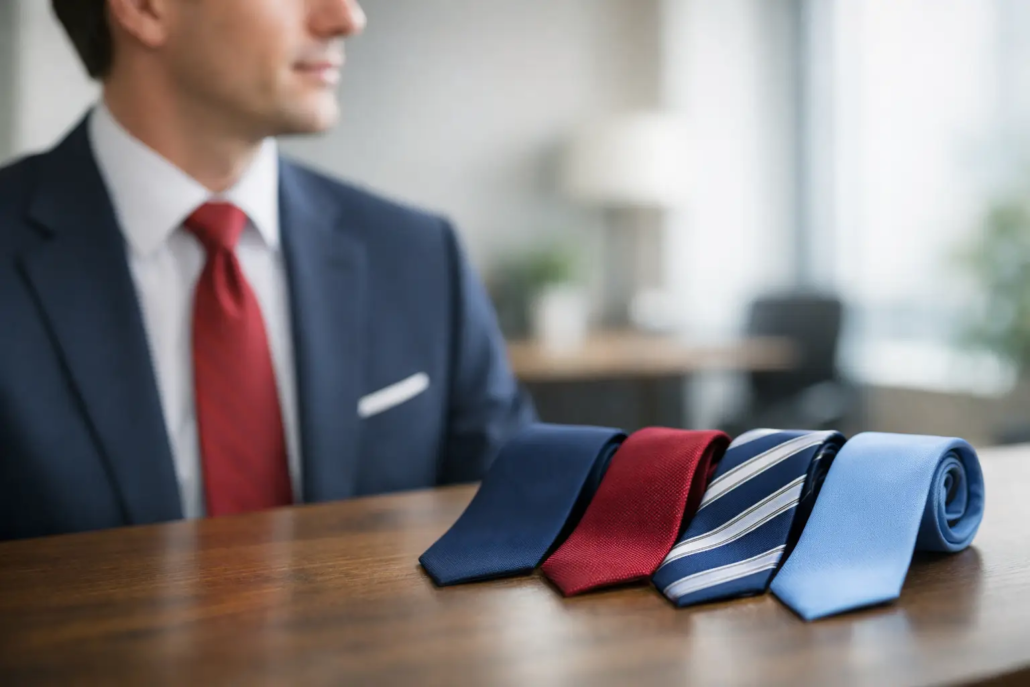
The interview starts before the handshake. Your tie is not supposed to be the most memorable thing in the room, but it should quietly tell the interviewer that you understand the setting and came prepared. If you are asking, “what tie color for interviews should I wear?” the reliable answer is navy or burgundy. Both look professional, photograph well, and coordinate easily with the suits most men already own.
The right choice still depends on the role, industry, and the rest of your outfit. A tie that feels polished for a bank interview can feel overdressed at a creative agency. The goal is not to erase your personality. It is to keep your style working in your favor.
What Tie Color for Interviews Makes the Best First Impression?
For most interviews, a dark navy tie is the safest place to start. Navy signals confidence without feeling aggressive, and it works especially well with a charcoal, medium gray, or navy suit. Choose a solid navy tie, a small dot pattern, or a restrained stripe when you want a traditional professional look.
Burgundy and deep wine red are close behind. They bring a little more warmth than navy while staying firmly in business territory. A burgundy tie looks sharp against a white or light blue dress shirt and pairs naturally with charcoal, navy, and medium gray suits. Skip bright fire-engine red for a first interview unless you are applying in a field where bold personal style is expected. Strong red can read as overly forceful when the rest of the room is more conservative.
Dark green is another smart option, particularly in forest or hunter green. It is distinctive without being distracting and looks excellent with navy, gray, and brown suits. If you want a little color while keeping the outfit grounded, a deep green tie is a dependable choice.
Start With the Industry, Then Choose the Tie
A tie should match the formality of the job you want, not just the job you have now. Corporate finance, law, government, consulting, and traditional sales roles usually reward a classic approach. In these settings, wear a navy, burgundy, or dark green silk tie with a subtle pattern or solid finish. Keep the overall contrast clean and controlled.
For interviews in technology, design, education, nonprofit work, or startups, you may have more flexibility. A textured knit tie in navy, a small-scale geometric print, or a muted plaid can add personality without looking casual. That said, flexibility is not a reason to wear a novelty tie. Save playful prints, loud florals, sports themes, and holiday designs for occasions where the dress code welcomes them.
If you are interviewing for a customer-facing role, remember that the interviewer is also imagining how you will represent the company. A balanced tie color shows that you can dress with intention without making the presentation all about yourself. When the workplace dress code is unclear, it is usually better to be slightly more polished than slightly too relaxed.
For Formal and Executive Interviews
Choose a solid or subtly patterned navy, burgundy, or dark green tie. A traditional-width silk tie is the strongest option, especially with a dark suit and crisp white shirt. A small repeating pattern can provide visual interest, but it should only be noticeable from a conversational distance.
For Business Casual Interviews
You may not need a tie at every business casual interview, but wearing one can still be a smart choice for a first meeting. If you do, select a softer option such as a navy knit tie, muted blue pattern, or textured burgundy tie. Pair it with a blazer, tailored trousers, and a button-down or dress shirt. The result should feel intentional, not like formalwear left over from a wedding.
For Creative or Style-Forward Roles
A tasteful pattern can help you look like yourself. Think small checks, fine stripes, muted paisley, or a rich textured fabric. Keep one part of the outfit simple. If the tie has a pattern, choose a solid shirt. If you wear a patterned shirt, select a solid tie that pulls one color from the shirt or jacket.
Match Your Tie to Your Suit and Shirt
Color matters, but coordination is what makes the outfit look finished. A navy tie with a navy suit can look sophisticated when there is enough contrast in texture or shade. For example, a slightly brighter navy tie against a deep navy suit creates depth, while a light blue shirt separates the colors.
With a charcoal suit, navy and burgundy ties are nearly foolproof. Charcoal provides a neutral background that makes both colors look rich and professional. A medium gray suit gives you even more flexibility, including dark green, plum, and muted blue ties. If you are wearing a black suit, keep the tie dark and refined, such as burgundy or deep navy, but know that charcoal or navy usually offers a more natural interview look.
White and light blue dress shirts make interview dressing much easier. A white shirt is the cleanest choice for formal environments and lets any of the recommended tie colors stand out. Light blue is friendly, classic, and especially good with navy or burgundy. Avoid busy shirt patterns if you are unsure about the tie. A simple shirt keeps the attention on your face rather than competing colors.
Pattern, Width, and Finish Matter Too
A good interview tie does not need to be plain, but its pattern should stay small and organized. Fine dots, narrow stripes, subtle checks, and understated geometric prints are all appropriate. Large graphics and high-contrast patterns can look busy on video calls and pull attention away from what you are saying.
Tie width should fit your jacket lapel and your build. For most men, a traditional tie around 3 to 3.25 inches wide is a reliable professional choice. Skinny ties can work in modern settings, but an extremely narrow tie may look too trend-driven for a conservative interview. An extra-long tie is worth choosing if you are taller or broader, since the tip should reach the belt line without forcing a tiny knot or an awkwardly short tail.
Silk offers a smooth, polished finish for formal interviews. Textured silk, grenadine, and knit ties can feel slightly more relaxed while still looking sharp. Whatever fabric you choose, make sure the tie is clean, wrinkle-free, and tied properly. A classic four-in-hand knot works for most collars and creates an easy, professional shape. A Windsor or half-Windsor can be a better match for a wider spread collar.
Colors and Styles to Leave for Another Day
There is no universal ban on bright colors, but an interview is rarely the time to test how far you can push the dress code. Neon shades, loud metallic finishes, oversized prints, and novelty designs may make a strong impression for the wrong reason. The same goes for ties with jokes, logos, political messages, or team branding.
Very pale ties can also be difficult. Light yellow, pastel pink, silver, or ivory may work for weddings and spring events, but they often lack the contrast that makes an interview outfit feel grounded. If you prefer a lighter look, use a light blue shirt and keep the tie in a deeper color.
A black tie should generally stay in the closet unless the employer specifically requests black-tie attire. Black is formal, but it can feel severe or funereal in a standard business interview. Choose navy, burgundy, or dark green instead and let the suit provide the structure.
Make the Final Decision the Night Before
Do not make tie color a last-minute decision while you are trying to find your keys. Put on the full outfit the night before, including jacket, shirt, belt, shoes, and tie. Check the look in natural light and on your phone camera if the interview is virtual. Some small patterns create a distracting visual effect on screen, while a solid navy or burgundy tie remains clear and professional.
Make sure the tie sits at the right length, the knot is centered, and the shirt collar lies flat. A tie bar is optional, but if you wear one, keep it simple and position it between the third and fourth shirt buttons. It should never be wider than the tie itself.
When you need a dependable finishing piece, Tie One On makes it easy to choose from classic silk ties, textured styles, traditional widths, and coordinating accessories without overcomplicating the outfit. Pick the color that supports your confidence, then spend your energy preparing the answers that will get you hired.


Leave a Reply
Want to join the discussion?Feel free to contribute!