

Groomsmen Tie Colors Guide for Wedding Style
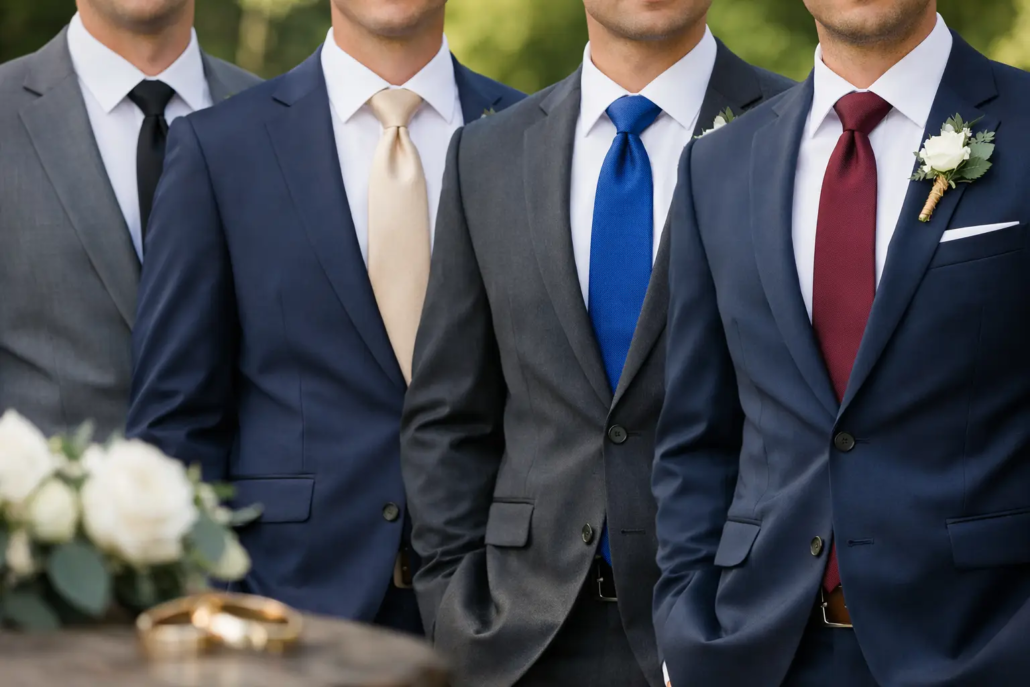
The fastest way to make a wedding party look sharp is to get the ties right. A solid groomsmen tie colors guide does more than match fabric to a color palette – it helps the whole group look coordinated in person, balanced in photos, and appropriate for the venue, season, and level of formality.
If you have ever lined up six groomsmen in “close enough” shades and realized three ties look navy, two look royal blue, and one somehow reads purple, you already know the problem. Tie color is a small detail that carries a lot of visual weight. The good news is that once you know how to choose around suit color, wedding palette, and dress code, the decision gets much easier.
How to Use a Groomsmen Tie Colors Guide
Start with the suits, not the ties. The suit color creates the foundation, and the tie should support it rather than compete with it. Black suits can handle stronger contrast and more formal shades. Navy suits are flexible and work with everything from soft pastels to rich jewel tones. Gray suits sit in the middle and can lean modern, classic, or seasonal depending on the tie color you choose.
From there, think about the wedding itself. A ballroom evening wedding usually calls for deeper, cleaner color choices than a casual daytime ceremony. Rustic settings can handle earthy shades. Summer weddings often look best with lighter, brighter tones, while fall and winter weddings usually benefit from richer colors with more depth.
The final filter is coordination, not duplication. Your groomsmen do not need to disappear into a perfectly identical wall of color unless that is the look you want. Most wedding parties look better when the ties clearly belong together but still feel intentional against the suits, shirts, and overall wedding colors.
Best Tie Colors by Suit Color
Navy suits
Navy is one of the easiest suit colors to coordinate. Burgundy, blush, sage, silver, dusty blue, and deep green all work well because navy gives you enough contrast without making the tie feel loud. For a formal look, choose darker colors with a smooth finish. For a lighter spring or summer feel, soften it with pastel tones or muted florals.
If the bridesmaids are wearing a color like dusty rose or eucalyptus, navy suits usually make that coordination easier. The ties can echo the wedding palette without looking washed out. This is one reason navy remains a go-to option for groomsmen – it plays well with almost every season.
Gray suits
Gray suits are versatile, but the shade matters. Light gray tends to work best with airy, fresh tones like lavender, light blue, blush, or soft green. Charcoal gray can carry darker colors like wine, emerald, plum, or steel blue.
Gray is also a smart choice when you want the ties to do more of the visual work. Because the suit itself is more neutral, the tie color has space to stand out. That can be helpful if you want the wedding colors to show up more clearly in the men’s attire.
Black suits
Black suits create a clean, formal backdrop, so tie color selection should feel deliberate. Black, silver, burgundy, dark red, and deep jewel tones usually work best. Lighter pastels can work, but they often shift the look from classic formalwear to something more stylized, so that choice depends on the wedding vibe.
If the event is black-tie-inspired or held in the evening, black or satin-finish dark ties often make the most sense. If you want color, keep it rich rather than bright.
Tan and lighter neutral suits
Tan, beige, and other lighter neutrals are popular for beach weddings, garden ceremonies, and warm-weather events. These suits pair well with ties in sage, terracotta, rust, dusty blue, floral patterns, and softer pinks. The goal is usually relaxed polish rather than hard contrast.
With lighter suits, avoid tie colors that feel too heavy unless you are creating a strong seasonal statement. A very dark tie can sometimes look abrupt against a breezier suit color.
Matching Tie Colors to Wedding Colors
The simplest approach is to pull from the wedding palette, but not always in the most obvious way. If the bridesmaids are wearing sage green, the groomsmen can wear sage ties, but they could also wear complementary neutrals or deeper greens that coordinate without looking overly matched.
That trade-off matters. Exact matching can look clean and easy, especially in photos, but it can also feel a little flat if every element is repeating the same color at the same intensity. Coordinated shades often create a more polished result. Think dusty blue instead of bright blue, wine instead of true red, or champagne instead of stark white.
If there are several wedding colors in play, pick one lead color for the ties and let the smaller details handle the rest. Pocket squares, boutonnieres, and florals can support the broader palette. The ties do not need to carry every wedding color at once.
Seasonal Tie Color Ideas
Spring weddings usually look best with softer colors and lighter visual weight. Blush, light blue, lilac, sage, and pale floral patterns all fit naturally. These shades feel fresh without looking too casual, especially when paired with navy or light gray suits.
Summer gives you room for brighter and more relaxed combinations. Coral, sky blue, seafoam, soft yellow, and tropical-inspired patterns can work, depending on the venue. For a more formal summer wedding, dusty tones often hold up better than very saturated brights.
Fall is where richer tie colors really shine. Rust, copper, burgundy, mustard, forest green, and burnt orange all pair well with charcoal, navy, and brown-toned neutrals. These colors add warmth and tend to photograph especially well outdoors.
Winter weddings usually call for depth and contrast. Emerald, deep red, plum, midnight blue, silver, and black all feel right at home. Texture also starts to matter more here. A matte woven tie or a richer fabric finish can make the look feel more seasonal and elevated.
Should the Groom Wear the Same Tie?
Sometimes yes, sometimes no. If the goal is a uniform, classic wedding party, matching ties create a clean lineup and keep the attention on the overall look. This works especially well for formal weddings and larger groups where visual consistency matters.
But many couples want the groom to stand out slightly. The easiest way to do that is not by changing everything, but by changing one element. The groom might wear the same color family in a different pattern, a richer texture, a bow tie instead of a necktie, or a tie in a shade that sets him apart while still coordinating with the group.
That balance is usually more effective than putting the groom in something completely unrelated. He should stand out, not look like he belongs to a different wedding.
Solids, Patterns, and Texture
Solid ties are the safest choice for most wedding parties because they read clearly in photos and coordinate easily across different body types and sizes. They also make it easier to match or closely coordinate across multiple groomsmen.
Patterns can work well when the wedding has a more relaxed or distinctive style. Florals, subtle stripes, checks, or textured weaves can add personality, especially for outdoor, rustic, or seasonal weddings. The caution is scale. A small, understated pattern usually performs better in group photos than a bold print that draws too much attention.
Texture is often overlooked, but it can change the entire feel of the outfit. Satin looks more formal. Cotton and linen blends feel lighter and more casual. Knit ties can be stylish, but they are better suited to less traditional weddings. If the dress code is formal, cleaner finishes usually make more sense.
Common Mistakes to Avoid
The biggest mistake is choosing tie colors from a phone screen and assuming they will all match in real life. Shades vary more than people expect, especially with blues, reds, pinks, and greens. If you are ordering for a group, consistency matters. One reliable source and one exact shade name can save a lot of frustration.
Another issue is focusing only on the bridesmaids’ dresses and forgetting the shirts and suits. A tie might coordinate perfectly with the wedding colors but still clash with the suit tone or disappear against the shirt. White shirts give you the most flexibility, which is one reason they remain the easiest choice for groomsmen.
It is also easy to over-style the group. If the tie is bold, keep the pocket square simple. If the suit is already making a statement, choose a cleaner tie color. Weddings usually look better when one element leads and the rest support it.
A Simple Way to Choose the Right Tie Color
If you want the shortest path to a polished result, pick the suit color first, match the tie to one key wedding color, and then adjust for season and formality. That formula works for most weddings because it keeps the decision practical. You are not trying to create the most creative tie lineup anyone has ever seen. You are trying to make the wedding party look sharp, coordinated, and confident.
That is where a specialty shop with real formalwear depth can make a difference. When you can compare classic shades, seasonal colors, textures, and widths in one place, it gets much easier to find the right fit for the whole group without stretching the budget.
A good wedding look does not need to be complicated. Choose a tie color that works with the suits, supports the wedding palette, and feels right for the setting, and your groomsmen will look like they belong exactly where they are.



Leave a Reply
Want to join the discussion?Feel free to contribute!