

Bow Tie vs Necktie: Which One Fits Best?
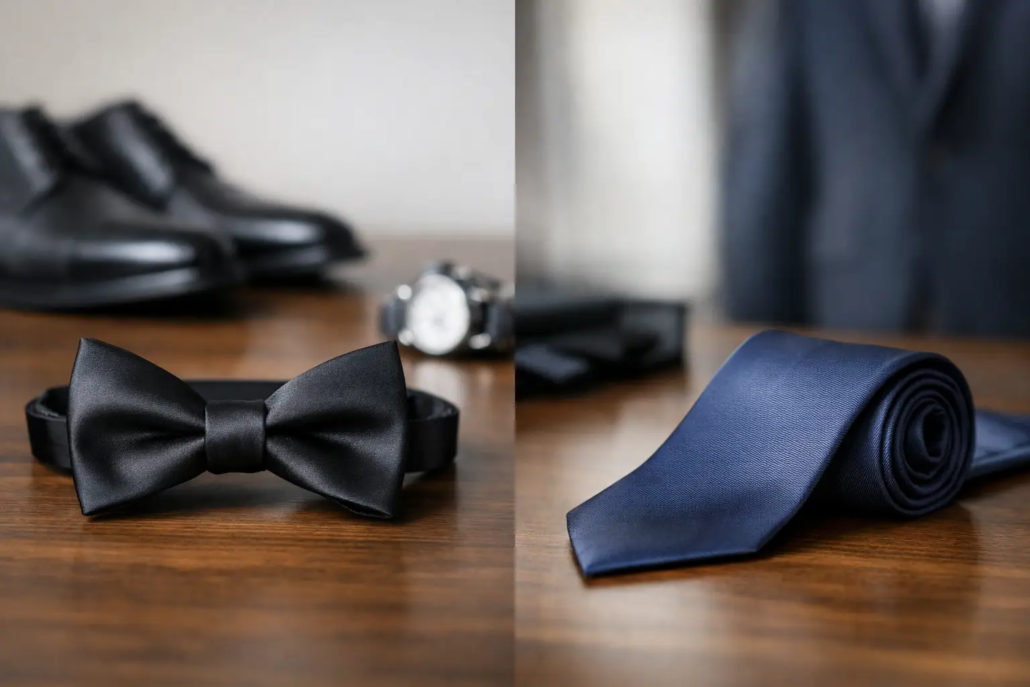
You can put on the same dress shirt and suit, switch only the tie, and change the entire message of the outfit. That is why the bow tie vs necktie question is not really about which one is better. It is about what kind of impression you want to make, where you are wearing it, and how comfortable you want to feel once you are dressed and out the door.
For some men, the necktie is the default because it works almost everywhere. For others, the bow tie adds personality that a standard tie cannot match. Both belong in a well-rounded wardrobe. The better choice depends on the setting, the dress code, your proportions, and your confidence wearing it.
Bow tie vs necktie: the real difference
A necktie is the more traditional everyday option. It is familiar, easy to style, and accepted in nearly every professional and formal setting. If you need one accessory that can cover office wear, weddings, church, business events, and school functions, the necktie gives you the most range.
A bow tie is more distinctive. It signals intention. Even when the color and fabric are classic, a bow tie stands out because fewer men wear one regularly. That can be a great thing if you want a sharper identity for a special occasion or if you simply like a more refined, old-school look.
The difference is not just shape. A necktie creates length through the center of the torso, which can make the body look taller and leaner. A bow tie keeps visual attention higher, closer to the face. That shift changes how the whole outfit reads.
When a necktie makes more sense
If you are dressing for versatility, the necktie usually wins. It fits more situations with less second-guessing. A solid silk tie, a subtle stripe, or a classic pattern can move from weekday meetings to Sunday service to a wedding reception without feeling out of place.
That flexibility matters for men who want affordable luxury and practical value from what they buy. One good necktie can do a lot of work in a wardrobe. It also pairs easily with different lapel widths, shirt collars, vest combinations, and suit colors, so it is often the easier choice if you are building outfits quickly.
Neckties also tend to feel safer for conservative dress codes. Job interviews, business presentations, corporate events, and formal daytime ceremonies usually lean toward the standard tie unless the event specifically invites more personality. If you do not know what everyone else will be wearing, a necktie is rarely the wrong call.
Another point in its favor is variety. Traditional widths, skinny ties, extra-long sizes, silk finishes, woven textures, and novelty prints all change the tone without changing the format. You can keep the familiar shape and still make the look your own.
When a bow tie is the better move
A bow tie shines when the event has more character or a stronger sense of occasion. Black tie is the obvious example, where a bow tie is not just appropriate but expected. Beyond that, it also works well for weddings, holiday parties, church attire, upscale dinners, performances, graduation events, and photos where you want a more memorable finish.
It is also a strong choice for men who wear dress clothes often and want something that sets them apart. A bow tie can make a simple blazer and shirt feel deliberate instead of routine. If your personal style leans polished, vintage-inspired, academic, Southern, or celebratory, a bow tie may feel more natural than a necktie ever will.
That said, context matters. A bright novelty bow tie can be fun, but it will not carry the same authority as a dark silk necktie in a professional meeting. A self-tie bow tie can look elegant at a formal event, while a pre-tied style may be the practical winner for young boys, busy wedding parties, or anyone who wants the look without the learning curve.
Bow tie vs necktie for weddings, work, and special events
Weddings
For weddings, the right answer usually depends on the formality and the role you are playing. Grooms, groomsmen, fathers, and ring bearers can all wear either style successfully, but the wedding theme should guide the choice.
A bow tie feels especially strong for black tie weddings, rustic weddings with personality, vintage-inspired ceremonies, and coordinated wedding parties where a distinct look matters. A necktie is often the better fit for traditional weddings, formal church ceremonies, and receptions where the dress code is dressy but not highly stylized.
Color coordination also matters more than many shoppers expect. A necktie often gives you more fabric surface to show off color or pattern. A bow tie can be cleaner and more compact, which works beautifully when the vest, pocket square, suspenders, or boutonniere are already doing part of the visual work.
Work
For workwear, neckties usually offer the easiest path. They read professional, polished, and broadly accepted across industries. If you rotate dress shirts during the week and need dependable combinations, neckties simplify the process.
Bow ties at work can absolutely work, but they tend to be more personal. They are often strongest in creative fields, education, retail leadership, hospitality, and any environment where individuality is welcome. If you already have a signature style, a bow tie can become part of it. If your workplace is more traditional, a necktie is the safer investment.
Special events
School dances, banquets, holiday parties, church programs, family portraits, and milestone celebrations all leave room for either option. Here, personality matters more. A bow tie can make a younger wearer look sharp and photo-ready. A necktie can add maturity and classic structure. If you are buying for boys, convenience may be the deciding factor, which is why clip-on and zip styles remain popular for special events.
Fit, proportion, and comfort
Style is only half the conversation. Proportion is what makes the accessory actually look right.
Neckties generally flatter a wide range of body types because they create a vertical line. Taller men often do well with standard or extra-long ties, while slimmer builds may prefer skinny or narrower widths. The tie should also make sense with the lapel width and shirt collar. When those details line up, the whole outfit looks more intentional.
Bow ties are more about face shape, collar space, and scale. A very small bow tie can disappear on a broad frame, while an oversized one can overwhelm a narrower face. The collar matters too. Spread and semi-spread collars usually handle bow ties better than very narrow point collars.
Comfort can be personal. Some men like the centered, compact feel of a bow tie because there is no fabric hanging down the shirt front. Others prefer the familiar drape of a necktie. If you move around a lot, eat at events, or spend long hours dressed up, that comfort difference may matter more than style theory.
Fabric and finish matter more than people think
If you are comparing a cheap shiny necktie to a textured self-tie bow tie, you are not really comparing formats fairly. Fabric changes everything.
Silk remains the classic option for both. It gives a cleaner finish and works across most formal occasions. Matte textures like cotton, linen blends, wool, and woven microfiber can make either style feel more relaxed or seasonal. Satin leans more formal. Novelty fabrics and playful prints can shift the look toward personality, gifting, or event-specific styling.
That is why shoppers should think beyond shape alone. The better question is often which combination of tie style, fabric, size, and color best fits the moment.
Which one should you buy first?
If you own neither, start with a necktie. It gives you the most wear, the broadest occasion coverage, and the easiest outfit coordination. A navy, burgundy, or classic pattern in a versatile fabric is a smart foundation piece.
If you already have a few neckties and want something that expands your options, add a bow tie next. It is a strong second purchase because it fills a different role. It is not redundant. It gives your wardrobe range.
And if you dress for weddings, church, school events, or seasonal celebrations more often than office meetings, the bow tie may earn its place faster than you expect. At a specialty formalwear shop like Tie One On, that is where assortment depth really helps. Different widths, finishes, and occasion-ready styles make it easier to choose confidently instead of settling.
The best choice is the one you will actually wear well
The bow tie gets remembered. The necktie gets relied on. Neither is automatically more stylish than the other.
If you want flexibility, professional polish, and an easy answer for most dress codes, choose the necktie. If you want character, formal distinction, or a look that feels a little more signature, choose the bow tie. And if your closet has room for both, that is usually the smartest move. Dress for the event, match the scale of your outfit, and pick the piece that makes you stand a little taller when you see yourself in the mirror.


Leave a Reply
Want to join the discussion?Feel free to contribute!