

Clip On vs Self Tie: Which Should You Wear?
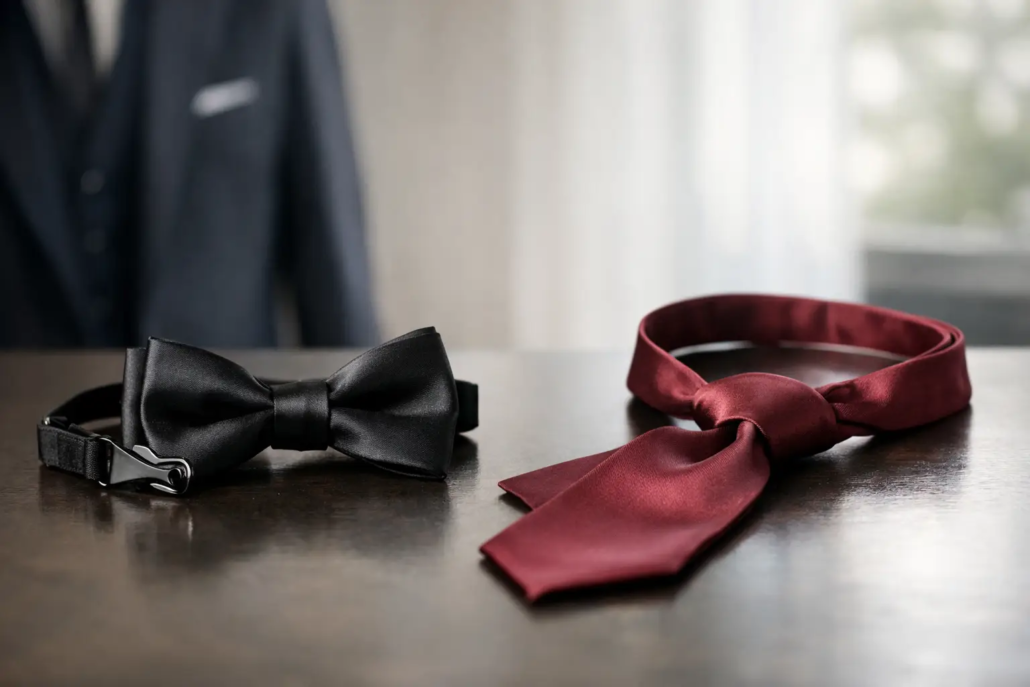
You can spot the difference between a rushed outfit and a finished one in about three seconds, and neckwear usually gives it away. When customers ask about clip on vs self tie, they are rarely asking only about mechanics. They are asking what looks sharper, what feels easier, and what makes sense for the event in front of them.
That is the real comparison. Both options have a place in a well-built wardrobe. The better choice depends on who is wearing it, how often it will be worn, and whether the moment calls for convenience, tradition, or a little of both.
Clip on vs self tie: what is the actual difference?
A clip-on tie attaches directly to the collar with a fastener. A self-tie is the traditional version you knot yourself, whether it is a necktie or a bow tie. That sounds simple enough, but the wearing experience is very different.
A clip-on is built for speed and consistency. It goes on quickly, stays in place, and gives you a polished look without requiring practice. A self-tie offers more control over the final appearance. You can adjust the knot, the length, and the overall shape to suit your collar, shirt, and frame.
If your priority is getting dressed fast and looking clean, a clip-on is hard to beat. If your priority is a more traditional finish and a personalized fit, the self-tie usually wins.
When a clip-on makes the most sense
Clip-on ties are often treated like a shortcut, but that misses the point. In many situations, they are simply the smarter tool for the job.
For boys, clip-ons are one of the easiest formalwear solutions available. Parents do not have to fight with a knot before church, school performances, weddings, or family photos. The tie sits neatly, the look stays consistent, and getting ready is far less stressful.
For adults, clip-ons are also practical for uniforms, quick event prep, and anyone who wants a dependable look without extra steps. If you wear a tie often and need to get out the door fast, that convenience matters. A good clip-on does not ask you to stand in front of a mirror fixing the knot five times before work.
There is also the question of comfort and security. Some wearers simply do not like the feel of a traditional tie pulled around the neck. Others prefer a clip-on because it stays in place and does not loosen throughout the day. If the goal is confidence and ease, there is no rule saying you have to choose the more complicated option.
That said, clip-ons do have limits. The fit is less customizable, and depending on the style, some can look a little too uniform or stiff compared to a well-tied traditional tie. Quality makes a difference here. A better fabric and shape will always wear better than a flimsy, flat-looking version.
Why many men still prefer a self-tie
Self-ties have earned their reputation for a reason. They tend to look more natural, especially up close, and they let the wearer control the final result.
With a standard necktie, knot choice affects the entire presentation. A fuller knot can balance a spread collar, while a slimmer knot can keep a narrow collar looking clean. Length matters too. A properly tied tie should hit around the belt line, and that alone can make the outfit look more intentional.
Self-tie bow ties carry even more personality. The slight asymmetry of a hand-tied bow tie is part of the appeal. It looks finished without looking machine-made. For black tie events, formal weddings, and dressier celebrations, many men prefer that traditional edge.
There is also a confidence factor. Knowing how to tie your own tie is one of those small skills that pays off for years. It helps with job interviews, date nights, church, business settings, and special occasions. Once you have it down, the extra minute or two is not much of a trade-off.
Still, self-ties are not automatically better just because they are traditional. If you rarely wear ties, struggle to keep the knot neat, or need something easy for a long event day, a self-tie can become more frustration than upgrade.
Clip on vs self tie for weddings, work, and special events
The occasion should drive the choice.
For weddings, self-ties usually have the edge for grooms, groomsmen, and adult guests who want a classic, elevated look. A self-tie bow tie feels especially appropriate for formal weddings. A traditional necktie also photographs well because it has more shape and character.
Clip-ons still make perfect sense for ring bearers, younger boys, or anyone who needs a no-fuss option that will stay put through the day. In a wedding party, consistency matters, so a well-matched clip-on can be the right answer if it helps everyone look coordinated without extra hassle.
For work, it depends on your routine. If you wear a tie every day and appreciate convenience, a clip-on can be a practical part of your rotation. If your workplace leans more classic or client-facing, a self-tie may give you the more polished look you want.
For church, graduations, holiday gatherings, and school events, both can work well. The deciding factor is usually how formal the outfit needs to feel and how much effort the wearer wants to put into getting ready.
What looks better?
This is the question most shoppers really mean to ask.
In general, a well-tied self-tie looks better than a clip-on. It has more dimension, a more natural drape, and a more customized fit. On a close inspection, especially with bow ties, the self-tie usually feels richer and more authentic.
But that is only true if it is tied well. A sloppy self-tie with poor length, a lopsided knot, or twisted fabric will not outperform a clean, properly fitted clip-on. A neat clip-on often looks better than a traditional tie that was rushed.
So the honest answer is this: the better-looking option is the one that fits correctly, matches the occasion, and is worn with confidence. Tradition matters, but presentation matters more.
Fit, fabric, and finish matter more than most people think
Whether you choose a clip-on or a self-tie, the details do the heavy lifting. The width should suit your build and lapel width. The color should support the shirt and suit rather than fight them. The fabric should match the occasion, whether that means a smooth satin finish for formal events or a more textured weave for everyday wear.
Bow ties and neckties both benefit from the same rule: avoid anything that looks cheap or overly shiny unless the event specifically calls for that finish. A better fabric improves drape, shape, and overall appearance immediately.
This is where shopping with a formalwear specialist helps. A broad assortment makes it easier to match the tie to the moment instead of settling for whatever is available. At Tie One On, that range is part of the advantage, especially when you are coordinating for work, weddings, boys’ formalwear, or multiple people at once.
Which option is right for you?
If you want speed, simplicity, and a reliable look, go with a clip-on. It is a smart choice for boys, busy mornings, uniforms, and anyone who prefers easy wear. There is nothing second-rate about choosing convenience when it serves the occasion well.
If you want a more traditional finish, more control over the fit, and a dressier overall effect, choose a self-tie. It is especially strong for weddings, formal events, and men who like the polish of a hand-finished look.
And if you are building a practical wardrobe, the best answer may not be one or the other. Many customers do well with both. A self-tie for the big moments, a clip-on for the fast ones, and the flexibility to dress appropriately without overthinking it.
The smartest tie choice is the one that helps you show up looking sharp, feeling comfortable, and ready for the occasion in front of you.



Leave a Reply
Want to join the discussion?Feel free to contribute!