

How to Coordinate Groomsmen Accessories Well
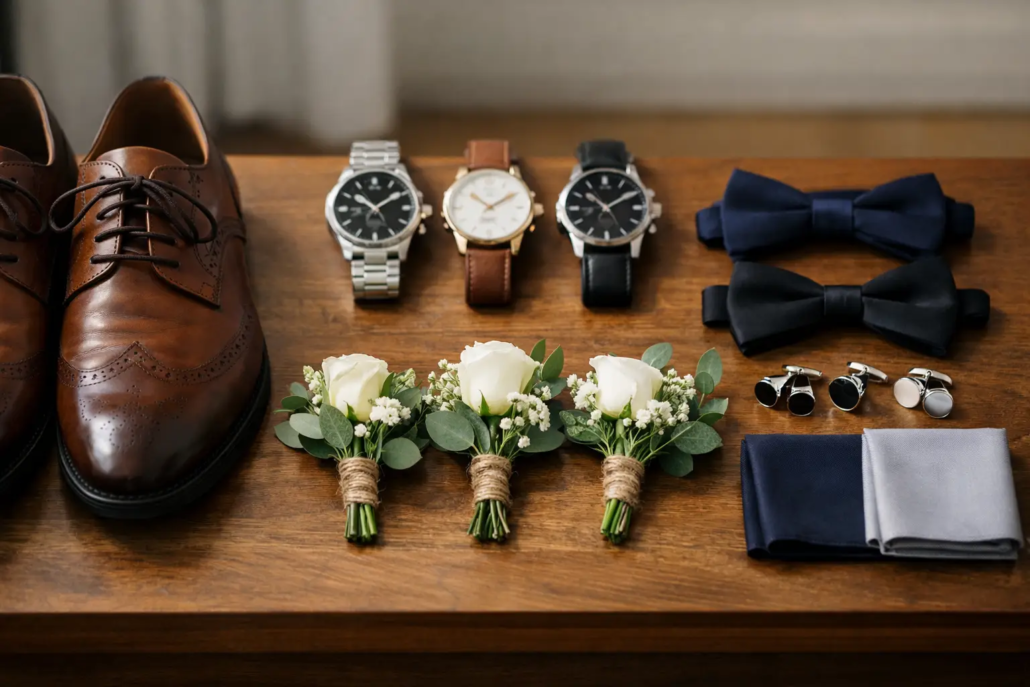
A wedding party can wear the same suit and still look unfinished if the details compete. Knowing how to coordinate groomsmen accessories gives the group a polished, intentional look without making every man feel like he is wearing a costume. The goal is not to match every item exactly. It is to create a clear visual connection between the groom, the groomsmen, the wedding colors, and the formality of the day.
The easiest way to get there is to make a few decisions in the right order. Start with the suits, choose one leading accessory color, then use the smaller details to support the look instead of adding more competing colors.
Start With the Suit, Shirt, and Wedding Formality
Accessories should never be the first decision. Before selecting ties, socks, or pocket squares, confirm the suit color, shirt color, venue, season, and dress code. A black tuxedo wedding calls for different choices than a summer ceremony with tan suits, and a rustic outdoor reception has more room for texture than a formal ballroom event.
For most weddings, a white dress shirt is the simplest foundation. It looks crisp in person, photographs well, and works with nearly every tie color. Light blue shirts can work with navy or gray suits, but they add another color to manage. If the wedding party is already using bold flowers, patterned dresses, or colorful décor, a white shirt keeps the men’s look clean.
The suit also sets the accessory range. Navy suits pair well with burgundy, blush, dusty blue, sage, gold, and many floral patterns. Charcoal suits are especially dependable with deep jewel tones, silver, black, and muted pastels. Tan and light gray suits look sharp with lighter, warmer, or more relaxed colors, but very dark accessories can create too much contrast for a daytime wedding.
Choose One Accessory as the Color Anchor
A tie or bow tie is usually the best color anchor for the groomsmen. It sits near the face, appears in photos, and gives the group an immediate sense of unity. Once that choice is made, every other accessory should either complement it or stay neutral.
Do not feel obligated to make the ties an exact match to bridesmaid dresses or flowers. Exact matching can be difficult across different fabrics and lighting, and slight variations often look more natural. Aim for a coordinated color family instead. For example, if the wedding palette includes terracotta, the groomsmen might wear burnt orange, cinnamon, or rust ties. For a dusty blue palette, a slate blue or muted blue tie can look more refined than a bright, overly literal match.
If the groom wants a little distinction, keep the difference controlled. He might wear the same color as the groomsmen in a different pattern, a bow tie while they wear neckties, or a tie with a more elevated texture. A groom in a floral tie beside groomsmen in solid ties can look excellent when the floral pattern includes the same base color.
Solid, Patterned, or Textured Ties?
Solid ties are the safest choice for a large wedding party because they are easy to coordinate and keep attention on the couple. They are especially useful when bridesmaid dresses, floral arrangements, or venue details already bring plenty of pattern.
Patterned ties add personality, but use them thoughtfully. A small floral, subtle plaid, or understated dot can bring warmth to a wedding without overpowering the group. If every groomsman wears the same pattern, keep pocket squares and socks simpler. If groomsmen are wearing different patterns in the same color palette, make sure the groom approves each one before ordering. Variety can look intentional, but only when the colors, scale, and formality are consistent.
Texture is another smart option. Knit ties, matte satin, linen-blend looks, and woven silk can make a single color feel more interesting. Texture is especially helpful for fall, winter, rustic, or outdoor weddings, while smooth silk and satin typically suit traditional formal settings.
Coordinate Pocket Squares Without Overmatching
Pocket squares should complement the tie, not duplicate it. A tie and pocket square made from the exact same fabric can look overly matched, particularly in close-up wedding photos. Instead, select a pocket square that pulls in one color from the tie, shirt, flowers, or wedding palette.
For a burgundy tie, a white pocket square with a small burgundy border is classic. For a floral tie, a solid white, ivory, or soft neutral square gives the outfit breathing room. A navy tie can pair with a white square, a subtle blue pattern, or a square that includes a quiet accent color from the wedding.
The fold matters less than the fabric and color, but simple is usually better. A clean presidential fold works for formal weddings. A relaxed puff fold feels more natural for garden, barn, or beach celebrations. The point is polish, not showing off a complicated fold that will not hold through photos and hugs.
Keep Metal Accessories Consistent
Tie bars, cuff links, watches, belts, and shoe buckles create a small but noticeable visual rhythm. The general rule is simple: match the metal tones within each outfit. Silver tie bars and silver cuff links work naturally with a silver watch. Gold accessories should pair with gold-toned watch hardware when possible.
Across the entire wedding party, perfect metal matching is not always necessary. It is more important that each groomsman looks put together. Still, if you are providing tie bars or cuff links as gifts, choosing one finish for everyone makes coordination easy and gives the group a thoughtful keepsake.
A tie bar should sit between the third and fourth shirt buttons and should never be wider than the tie. Cuff links are best reserved for French-cuff shirts or more formal attire. If the groom is wearing cuff links but the groomsmen are not, that is a subtle and effective way to set him apart.
Match Belts and Shoes First, Then Consider Socks
Belts and shoes should match in color family. Black leather shoes call for a black belt. Brown shoes need a brown belt, though the shades do not have to be identical. Dark brown shoes and a medium brown belt can work well when both have a similar finish and formality.
For tuxedos, skip the standard belt. Formal trousers should fit correctly, and a cummerbund or suspenders may be appropriate depending on the look. Suspenders can also work with suits for a vintage or rustic style, but they should be planned as part of the outfit from the beginning. Adding them at the last minute often makes the group look less cohesive.
Socks are where couples can add a little personality. A solid sock in navy, charcoal, burgundy, or another wedding color is a dependable choice. Patterned socks can be fun for getting-ready photos, but they should not become the main event. If the wedding party is wearing bold socks, let the ties and pocket squares stay restrained.
Build a Simple Accessory Plan for the Entire Group
The biggest coordination mistake is letting every groomsman shop on his own without clear direction. Even a simple plan prevents mismatched shades, different tie widths, and accessories that do not fit the wedding’s formality.
Give the group the exact tie or bow tie selection, shirt requirement, belt and shoe color, and whether pocket squares, tie bars, or suspenders are included. A single reference photo is useful, but written details matter too. Lighting and phone screens can make one color look very different from another.
If you are buying accessories for several people, order early and keep a few practical backups. Ties can get misplaced, shirts can arrive in the wrong size, and a groomsman may realize his belt is the wrong shade the week of the wedding. Buying from a specialty formalwear shop such as Tie One On makes it easier to keep the style consistent while choosing from ties, bow ties, pocket squares, suspenders, socks, and finishing details in one place.
Let the Groom Have One Intentional Difference
The groom does not need a completely different outfit to stand out. In fact, too many differences can make the wedding party feel disconnected. One or two intentional changes are enough: a different tie pattern, a boutonniere variation, a special pocket square, upgraded cuff links, or a vest when the groomsmen wear jackets only.
This approach keeps the group unified while ensuring the groom is easy to spot in photos. It also works for weddings where the groom and groomsmen have different body types or comfort preferences. Everyone can wear a flattering fit while the accessories carry the coordinated look.
A well-coordinated wedding party should look like it belongs together before anyone sees the ceremony colors up close. Choose a strong tie direction, keep the supporting accessories purposeful, and leave room for the people wearing them to feel comfortable. That is the kind of polish guests notice and photos remember.



Leave a Reply
Want to join the discussion?Feel free to contribute!