

How to Wear a Vest for Work, Weddings, and More
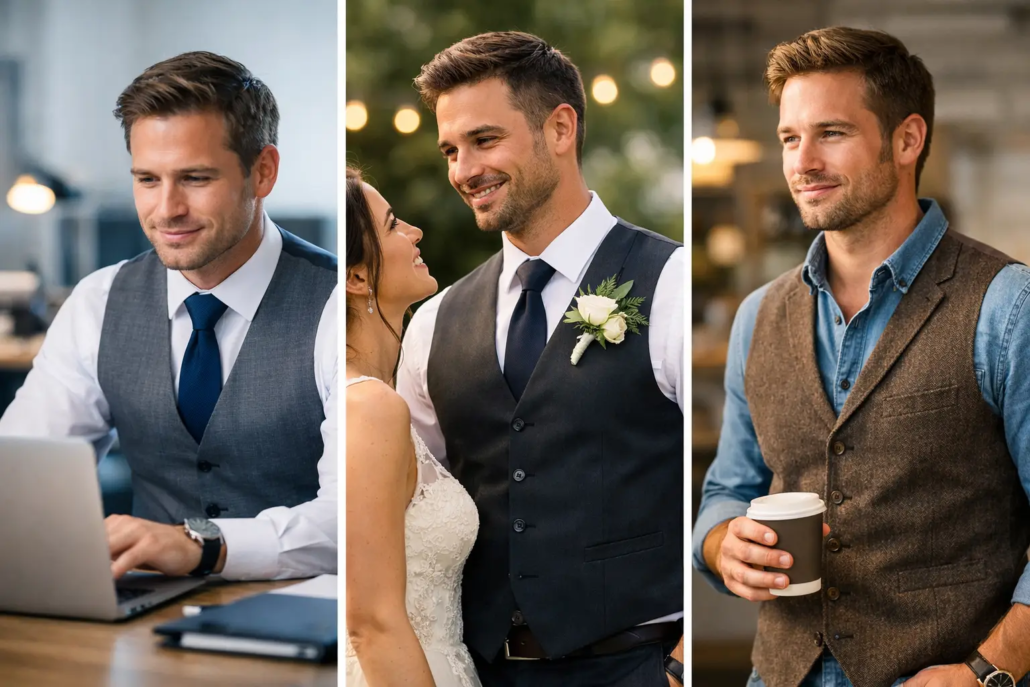
A vest can make a familiar shirt-and-tie outfit look intentional in about 30 seconds. The key to how to wear a vest is not piling on more formal pieces. It is choosing a vest that fits close, works with the occasion, and gives your shirt, tie, and trousers a clean place to meet.
For most dress occasions, “vest” means a tailored waistcoat: the button-front layer worn with a suit, dress pants, or tuxedo. It can sharpen up an office look, pull a wedding party together, or give you a polished option when a full jacket feels like too much. Get the proportions right, and it looks effortless. Get them wrong, and even a good-looking vest can feel borrowed.
Start With a Vest That Fits
Fit does most of the work. A dress vest should lie flat across your chest and torso without pulling at the buttons or standing away from your body. It should be fitted, but never restrictive. You need room to sit, breathe, and move through a reception without feeling like the vest is doing all the breathing for you.
The shoulder seams should sit at the edge of your shoulders, while the armholes should be high enough to look neat without rubbing. Across the back, the fabric should stay smooth rather than tightening into horizontal lines. Most vests have an adjustable strap in back, which is useful for fine-tuning the fit, not for rescuing a vest that is two sizes too large.
Length matters just as much. The bottom of the vest should cover your waistband. Your shirt should not show in a strip between your vest and pants when you stand normally or raise your arms. Higher-rise dress pants make this easier, especially for formalwear. If you are wearing a belt, keep it covered. A visible belt cutting across the bottom of a vest interrupts the clean, tailored line you are after.
How to Wear a Vest With Dress Pants
A vest looks best with tailored trousers that have a clean fit through the waist and seat. The pants do not need to be skinny, but they should not be overly loose or sag low on the hips. A vest is designed to create a defined upper body, and baggy pants can throw off that balance.
For a classic three-piece suit, match the vest to the suit jacket and trousers. Navy, charcoal, medium gray, and black are reliable choices because they work across business events, weddings, church, and formal celebrations. A matching vest gives you options: wear the full suit for the ceremony or meeting, then remove the jacket later while still looking put together.
You can also wear a vest that contrasts with your trousers. Gray pants with a navy vest, for example, are a dependable smart-casual combination. Keep the colors purposeful. If the vest is patterned, textured, or a bold color, let the pants stay quieter. If the trousers have a noticeable pattern, choose a solid vest so the outfit does not start competing with itself.
Suspenders are often a better partner for a vest than a belt because they preserve a smooth waistline. They are especially appropriate for weddings, black-tie events, and vintage-inspired looks. If you choose suspenders, make sure they coordinate with your shoes and the overall formality of the outfit.
Choose the Right Shirt and Tie
A crisp dress shirt is the simplest starting point. White is the most flexible choice and works with nearly every vest color, while light blue adds a little contrast for work or daytime events. A subtle stripe or small check can work too, but pair it with a solid vest and a tie that does not introduce another loud pattern.
Your collar should sit neatly under the vest and tie. A traditional spread or point collar is easy to coordinate with a necktie, while a wing collar is reserved for more formal tuxedo settings. Make sure the shirt sleeves are the right length. A vest draws attention to the front of your outfit, so rumpled cuffs or sleeves that are too long will be more noticeable.
With a necktie, the tie should reach your waistband, even though the vest will cover most of its length. The knot and upper section remain visible, so that is where color and texture make the biggest impact. A silk tie in a solid color, subtle stripe, or small-scale print works well for business and wedding attire.
Bow ties are a natural match for vests, particularly at weddings and formal parties. A black bow tie with a black tuxedo vest is classic. For a wedding party or celebration, a coordinating bow tie and vest can bring in the event color without requiring every part of the outfit to match exactly. A pocket square can add a finishing detail, but it should complement the tie rather than duplicate it perfectly.
Button the Vest Correctly
Most traditional vests have five or six buttons. Leave the bottom button undone. This long-standing rule helps the vest sit better when you sit or move, and it keeps the front from looking strained. If your vest has only a few buttons, the same principle generally applies: button it neatly, but leave the lowest button open unless the design specifically calls for it to be fastened.
A double-breasted vest is more formal and should usually be worn fully buttoned. Because it has more visual presence, keep the rest of the outfit simple. It is a strong choice for a formal wedding, a gala, or a groom who wants a more traditional look.
Do not wear a vest open like a casual overshirt when the event calls for formalwear. A tailored vest is meant to look structured. If you want a relaxed outfit, choose a sweater vest or a casual utility vest instead. They follow different rules and suit different settings.
Match the Vest to the Occasion
For work, keep the colors versatile and the fabrics refined. A navy or charcoal vest with dress pants, a white or light blue shirt, and a classic tie creates professional polish without making you look overdressed. In a conservative office, a matching three-piece suit is a safe choice. In a more relaxed workplace, skip the jacket and let the vest be the tailored layer.
For weddings, the dress code should lead. A groom or groomsman may wear a matching vest as part of a suit or tuxedo, often with coordinated ties, bow ties, and pocket squares. Guests can wear a vest with a suit for a formal ceremony or pair a vest and dress pants for a cocktail or semi-formal wedding. Avoid white or ivory vests unless you are part of the wedding party and the couple has chosen that look.
For black tie, follow the formality of the tuxedo. A low-cut black evening vest or formal cummerbund is appropriate, usually worn with a tuxedo shirt and black bow tie. Skip colorful novelty pieces here. Black tie has room for personal style, but the details need to stay elegant.
For holiday parties, school dances, church events, and celebrations, a vest is an easy way to bring in color. Burgundy, emerald, deep blue, or a tasteful pattern can feel festive while staying polished. Let one item be the statement. If the vest is bold, use a solid shirt and a simple tie. If your tie has personality, choose a vest that supports it instead of fighting for attention.
Add Layers Without Losing the Shape
A suit jacket belongs over a dress vest, not under it. The vest should remain close to the body, with the jacket moving comfortably over the top. Make sure the vest is not longer than the jacket and does not bunch at the sides.
When you take the jacket off, your outfit should still look complete. That is one of the best reasons to wear a vest at a long wedding or all-day event. You keep a dressed-up silhouette without overheating or looking like you simply removed part of your outfit.
A vest can also work under an overcoat in cold weather. Choose a coat with enough room through the chest so the layers lie flat. Avoid adding a bulky sweater underneath a formal vest. If the temperature calls for more insulation, an overcoat is the cleaner solution.
Finish With Details That Belong Together
Your shoes should match the formality of the vest. Black leather shoes are the standard choice with black, charcoal, or formal navy outfits. Brown leather works well with navy, medium gray, tan, and earth-toned combinations. Keep the leather color consistent across your shoes, belt if you wear one, and watch strap when possible.
Small accessories can make the look feel coordinated rather than assembled at the last minute. A tie bar should sit between the third and fourth shirt buttons, securing the tie to the shirt without extending wider than the tie itself. Cuff links are appropriate with French-cuff shirts, especially for weddings and formal events. A pocket square is optional, but it is an easy way to echo a color from your tie or vest.
The best vest outfit feels comfortable enough that you stop thinking about it once you leave the house. Start with a proper fit, use the occasion as your guide, and choose accessories that support the look. Whether you are dressing for a Monday meeting or the biggest day in your friend’s wedding, a well-worn vest gives your outfit the confident finish it deserves.


Leave a Reply
Want to join the discussion?Feel free to contribute!