

Formal Accessory Coordination Guide for Men
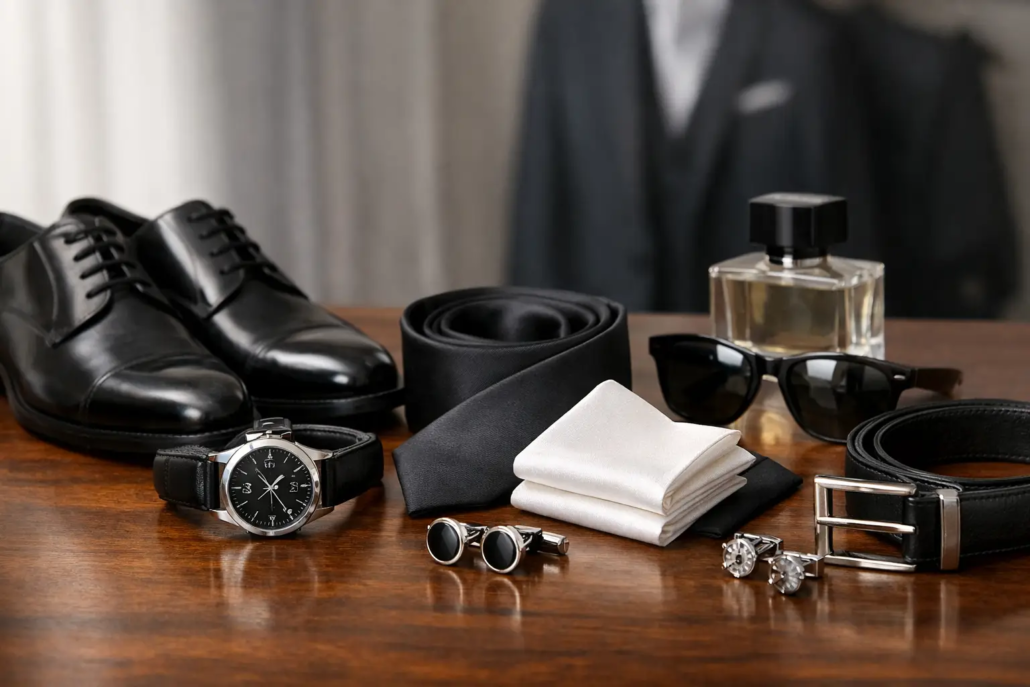
A great suit can still look unfinished if the accessories are fighting each other. This formal accessory coordination guide helps you build a polished look by giving every piece a job: the tie brings focus, the pocket square adds dimension, and finishing details support the outfit without taking it over.
The goal is not to match every item exactly. In fact, a tie, pocket square, socks, and cuff links in the same color and pattern can look more like a costume than a well-considered outfit. Strong coordination comes from using related colors, complementary textures, and the right level of formality for the occasion.
Start With the Foundation
Before choosing a tie or tie bar, establish the three pieces that carry the most visual weight: your suit or jacket, your dress shirt, and your shoes. Accessories should respond to those items, not compete with them.
A navy suit and white shirt give you nearly unlimited range. A burgundy, blue, green, silver, or patterned tie can all work. A charcoal suit is similarly flexible, though darker red, deep blue, black, and silver accessories often feel especially sharp. With a black suit, keep the setting in mind. Black is at home at formal evening events, funerals, and black-tie-adjacent occasions, while navy and charcoal tend to offer more versatility for work and daytime celebrations.
Your shirt matters just as much. White shirts are the easiest canvas. Light blue shirts work beautifully with navy, burgundy, rust, gold, and darker green ties. If you choose a striped or checked shirt, give the tie a noticeably different scale. A small-striped shirt needs a larger tie pattern, while a bold shirt often looks best with a solid or subtly textured tie.
Formal Accessory Coordination Guide: Match Colors, Not Exact Pieces
The most useful rule in formalwear is simple: coordinate colors, but do not duplicate every detail. Your pocket square can pull a secondary color from your tie, your shirt, or your jacket lining. It does not need to be cut from the same fabric as the tie.
For example, a navy tie with small burgundy dots works well with a white pocket square featuring a narrow burgundy border. A solid burgundy tie can pair with a soft blue, cream, or lightly patterned pocket square. The colors relate, but the pieces still have their own character.
Tie and pocket square sets are an easy choice when you want a dependable, ready-made pairing for a wedding, church service, school dance, or family photos. They are especially helpful when coordinating a group. For individual outfits, though, do not feel limited to exact-match sets. A little contrast usually looks more refined.
Think about color in terms of temperature and depth. Deep navy, forest green, plum, burgundy, and chocolate brown work naturally together because they have similar richness. Pastels such as blush, lavender, sage, and light blue are excellent for spring weddings and daytime events, particularly with lighter gray, tan, or blue suits. If one accessory is bright, let the others stay quieter.
Choose the Right Tie for the Occasion
Tie width, fabric, and pattern all send a message. A traditional-width silk tie is the most flexible choice for business settings, weddings, church, and formal dinners. It has enough presence to balance most lapels and looks appropriate across age groups.
Skinny ties can look modern and clean with narrow-lapel suits and slimmer builds, but they are not the default for every event. A very narrow tie may feel out of place with a broad-shouldered suit or a traditional wedding party. Extra-long ties are the better choice for taller men or anyone who needs more length for a proper knot and proportion. The tip of the tie should land near the center of your belt buckle, not above it or far below it.
For the most formal occasions, choose a self-tie bow tie in black, dark navy, burgundy, or a rich textured fabric. A bow tie makes sense for black-tie events, holiday parties, themed celebrations, and weddings where the dress code calls for it. Pre-tied and clip-on options offer a practical, polished solution when speed matters, especially for younger wearers or large groups.
Novelty ties, bolo ties, and bold prints have their place too. Wear them when the event invites personality: a casual office day, holiday party, western wedding, themed fundraiser, or a gift that is meant to get a conversation started. The rest of the outfit should stay simple so the tie remains intentional rather than distracting.
Balance Metal, Leather, and Small Details
The smallest accessories can make an outfit feel finished. They can also create unnecessary visual noise when every item is trying to stand out. Choose a metal tone and repeat it where practical. If you are wearing a silver watch, a silver tie bar, silver cuff links, and a silver belt buckle will look naturally connected. Gold can work just as well, particularly with warmer colors like brown, burgundy, olive, and cream.
Your belt should generally match your shoes. Black shoes call for a black belt. Brown shoes call for a brown belt in a similar shade. A dark brown belt with light tan shoes is not always wrong, but the contrast should look deliberate. For formal events, a clean leather belt with a simple buckle is usually the safest choice.
Cuff links are optional unless you are wearing a French-cuff shirt, but they are an easy way to add polish for weddings, celebrations, and special dinners. Keep them classic if your tie has a strong pattern. If your tie and pocket square are understated, cuff links with a little color or texture can become a tasteful point of interest.
A tie bar should sit between the third and fourth buttons of your dress shirt and should never be wider than your tie. Its purpose is to keep the tie in place, not to become the centerpiece of the outfit. Suspenders are another strong option, especially for formalwear or vintage-inspired looks. If you wear suspenders, skip the belt. Wearing both is unnecessary and can make the waistline look crowded.
Use Texture to Add Depth
Coordination is not only about color. Texture keeps a monochromatic or neutral outfit from looking flat. A smooth silk tie looks sharp with a crisp poplin shirt, while a knit tie brings relaxed texture to an oxford shirt or sport coat. A subtle paisley, grenadine-like weave, or matte finish can add interest without demanding attention.
This matters most when your palette is simple. A charcoal suit, white shirt, and black tie can look excellent for an evening event, but it may need a textured tie, a crisp white pocket square, or refined cuff links to avoid looking generic. Likewise, a navy suit with a navy tie can be very sophisticated when the tie is a different shade or fabric from the suit.
Be careful with too many patterns at once. You can combine a striped shirt, patterned tie, and printed pocket square, but each pattern should vary in scale and one piece should be quieter than the others. When in doubt, make the shirt or tie solid and let one accessory provide the pattern.
Coordinate for Groups Without Losing Individual Fit
Wedding parties, church groups, school events, and family photos often require several people to look coordinated. The easiest approach is to choose one shared element, such as the same tie color, bow tie, or pocket square, then allow the rest of the outfit to work for each person.
A groom may wear a textured ivory tie while groomsmen wear coordinating sage or dusty blue ties. Fathers can wear a deeper version of the wedding color, such as navy or burgundy, which keeps them connected without looking identical. Boys’ ties and bow ties should coordinate with the palette, but comfort and fit come first. A well-fitted, easy-to-wear accessory is better than a complicated piece that will be removed before the photos begin.
For groups, order early and check the exact color in the same lighting whenever possible. Screens can shift tones, and names like “dusty blue” or “wine” can vary from one fabric to another. Keeping all ties and pocket squares from the same collection is often the simplest way to avoid close-but-not-quite matches.
A Quick Final Check Before You Leave
Take one minute in front of a mirror and look at the outfit from a few steps back. Check that the tie reaches the belt buckle, the collar sits cleanly, and the tie knot matches the collar spread. Make sure your pocket square is visible without being oversized, your belt matches your shoes, and your metals look intentional.
Most formal outfits do not need more accessories. They need better coordination. Start with the occasion, choose one piece that carries personality, and let every other detail support it. If you need a second opinion, the formalwear experts at Tie One On can help you find the combination that looks right for your event and your style.


Leave a Reply
Want to join the discussion?Feel free to contribute!