

How to Store Neckties Properly Without Creases
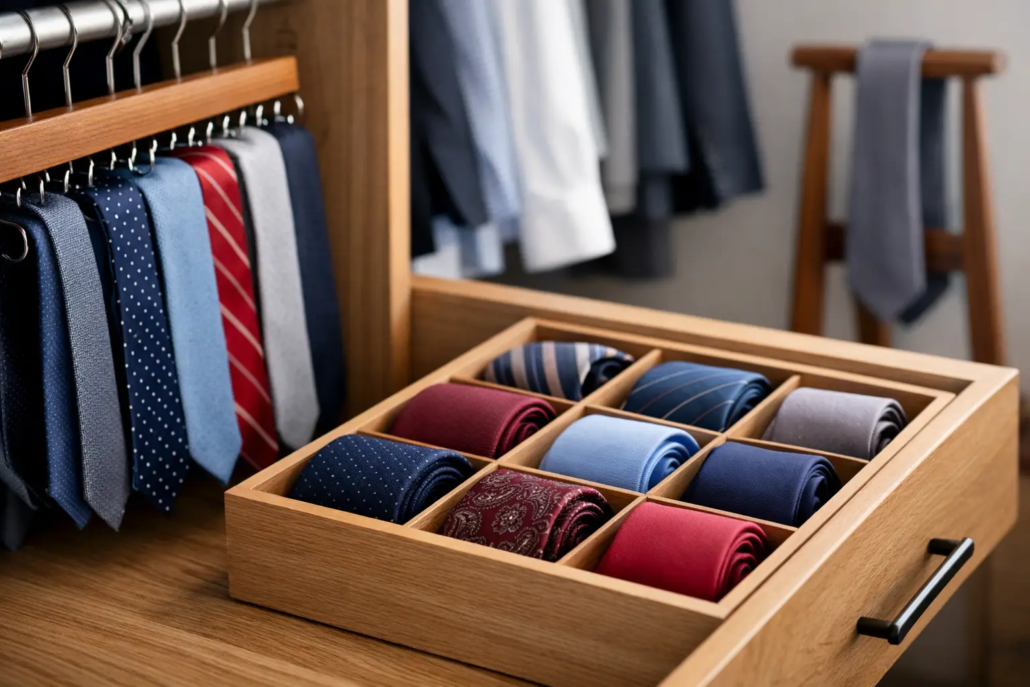
A good tie can pull together a work shirt, wedding suit, or Sunday best in seconds. A wrinkled, faded, or permanently creased tie does the opposite. Knowing how to store neckties properly protects the shape, color, and feel of the ties you reach for most – whether you own three dependable solids or a full collection for every occasion.
The best storage method depends on your space and routine, but the rule stays the same: ties should be clean, dry, relaxed, and protected from pressure and direct sunlight. Silk especially rewards a little care. It is durable enough for regular wear, yet its fibers can hold creases and show damage when a tie is folded carelessly or crushed under heavier clothing.
Start by Taking the Tie Off Correctly
Proper storage starts when the event ends. Never pull the narrow end through the knot or yank a tie loose. That puts unnecessary stress on the fabric and can distort the interlining inside, especially with silk neckties.
Instead, reverse the steps you used to tie it. Loosen the knot gently, then pull the wide blade back through in the opposite direction. It takes an extra moment, but it helps the tie keep its original shape and prevents the fabric from developing a permanent twist near the knot.
If the tie picked up a small spot during dinner or a long day at the office, address it before putting it away. Blot a fresh spill lightly with a clean cloth. Avoid rubbing, soaking, or tossing a silk tie into the washing machine. Moisture and aggressive cleaning can leave marks, spread the stain, or alter the fabric’s finish.
Give It Time to Relax
A tie that has been knotted all day benefits from a little downtime. Hang it overnight or loosely roll it before placing it in a drawer. This lets the fabric release minor tension from the knot and helps small wrinkles soften naturally.
For a noticeable crease, do not press a hot iron directly onto the tie. High heat can flatten texture, create shine, and damage delicate silk. Hang the tie in a steamy bathroom while you shower, or use gentle steam from a safe distance. Keep the tie from getting wet, and let it dry fully before storing it.
How to Store Neckties Properly in a Closet
Hanging is the easiest choice for ties you wear often. A dedicated tie rack, a hanger with tie loops, or even a standard hanger with a few smooth hooks keeps each tie visible and ready to wear. This option works especially well for professionals, wedding parties, and anyone who likes to coordinate an outfit quickly on a busy morning.
Hang ties by the narrow end or drape them evenly over a horizontal bar. Avoid sharp hooks, rough wood, or wire edges that can snag fabric. Leave enough room between ties that they are not bunched together. A tightly packed rack may save space, but it can wrinkle the blades and make it harder to see colors and patterns.
Keep the rack inside a closet rather than on an open wall near a window. Direct sunlight gradually fades color, and prolonged exposure can make a navy, burgundy, or black tie look uneven. A closet also helps protect ties from dust, cooking odors, and curious pets.
If you have a smaller wardrobe, a rotating tie organizer can be useful. Just choose one that holds ties without pinching them. Convenience matters, but not if a clip leaves dents in the fabric.
Drawer Storage Works Beautifully for Larger Collections
A drawer is often the best home for ties you want to protect from dust and light. It also creates a clean, organized look when your closet is already crowded with suits, shirts, and jackets. The key is to avoid folding ties into sharp rectangles.
The preferred drawer method is a loose roll. Lay the tie flat, smooth it gently from the knot end toward the tip, and roll it from the narrow end toward the wide blade. The roll should be relaxed, not tight. Place each tie side by side in a drawer organizer or shallow tray, with the pattern or color easy to see.
Drawer dividers are helpful when you own several styles: classic-width silk ties for work, skinny ties for a modern look, novelty ties for holidays, and extra-long ties for a more comfortable fit. Sorting by color is practical for daily dressing. Sorting by occasion can be even faster if you regularly need options for church, business meetings, weddings, or school events.
Do not stack heavy accessories on top of your ties. Belts, cuff link boxes, watches, and dress shoes can leave flattened areas that are difficult to remove. A shallow drawer is better than a deep one because it discourages piles.
When Folding Is Acceptable
Folding is not ideal for long-term storage, but it can be practical for travel or a very limited space. If you must fold a tie, make broad, gentle folds rather than tight bends. Place it in a soft pouch or the top section of a garment bag, where it will not be pressed under shoes or toiletries.
For a tie you wear only once or twice a year, a loose roll inside a drawer or storage box is generally safer than leaving it sharply folded for months. Holiday and novelty ties deserve the same care as your everyday favorites if you want them to look sharp when the season returns.
Protect Silk, Knit, and Specialty Ties Differently
Not every tie should be stored the same way. Traditional silk neckties are usually happy hanging or loosely rolled. Knit ties, however, can stretch under their own weight if left hanging for long periods. Store knit ties flat or loosely rolled in a drawer to preserve their texture and length.
Bolo ties are best kept flat in a drawer, box, or soft pouch so the cord does not tangle and the slide does not scratch other accessories. Clip-on and zip ties should be hung or laid flat with their mechanisms protected from pressure. If you are storing a bow tie, keep a pre-tied style in a small compartment or pouch so its bow is not crushed; self-tie bow ties can be loosely rolled or laid flat.
Ties with special finishes, textured weaves, or designer fabrics deserve extra breathing room. Do not store them in plastic bags for long periods. Plastic can trap moisture, which creates an unfavorable environment for natural fibers. A clean drawer, breathable fabric pouch, or covered organizer is a better choice.
Keep Ties Ready for Travel and Special Events
For travel, use a tie case if you bring several ties. It is one of the simplest ways to prevent crushed blades when packing a suit for a destination wedding, conference, or family celebration. If you do not have a case, loosely roll each tie and place it in a clean pair of socks, a soft pouch, or a small packing cube near the top of your suitcase.
Never wrap a tie tightly around a shirt or stuff it into a shoe. Shoes transfer dirt and odor, while tight wrapping creates exactly the creases you are trying to avoid. Pack a spare tie if the event matters. A backup in a versatile solid or subtle pattern can save the day after a coffee spill or luggage mishap.
When you arrive, unpack ties first and hang them in the closet. If one has travel wrinkles, give it time to relax before trying steam. Most minor creases fade once the tie hangs freely for a few hours.
Build a Storage Routine You Will Actually Use
The best system is the one you can maintain after a long day. If you wear ties frequently, keep your go-to options on a closet rack and move seasonal or occasional styles into a drawer. If your collection is smaller, a drawer organizer may be all you need.
Every few months, take a quick look through the collection. Remove ties with stains that need professional attention, separate styles that no longer fit your wardrobe, and check for loose threads or damaged loops. This is also a good time to identify the gaps in your lineup – perhaps a versatile solid, a wedding-ready pattern, or a coordinating pocket square set.
At Tie One On, we believe formalwear should be easy to wear and easy to keep looking its best. Give each tie a clean, uncrowded place to rest, and it will be ready whenever the occasion calls for signature style.



Leave a Reply
Want to join the discussion?Feel free to contribute!