

Dress Belt Versus Suspenders: Which Looks Best?
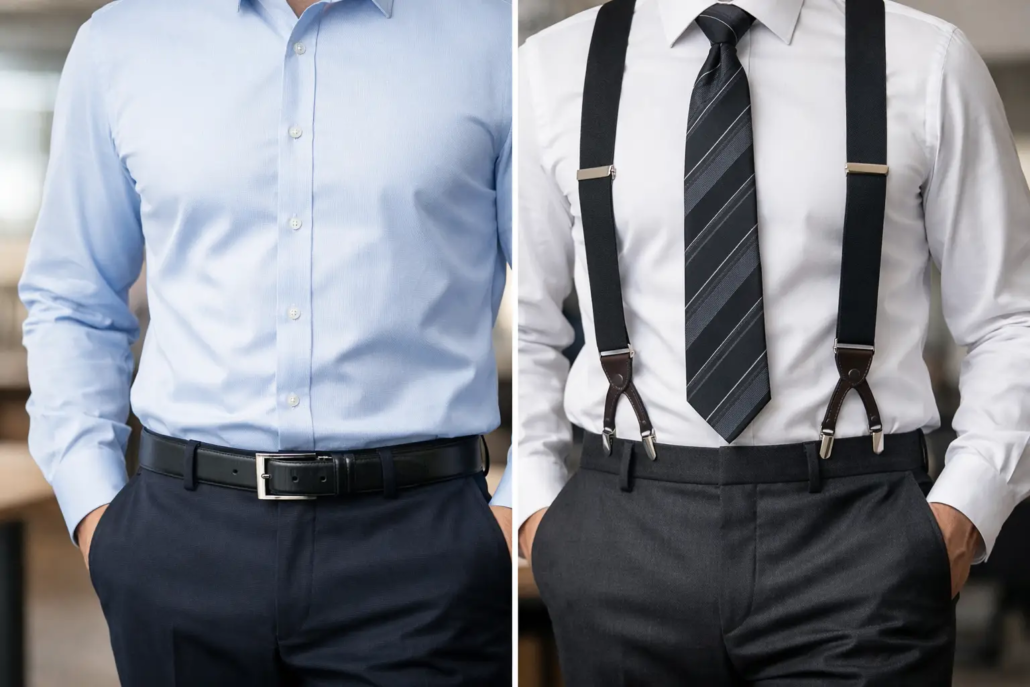
A well-chosen tie can sharpen a suit, but the wrong choice at the waist can throw off the whole look. The dress belt versus suspenders decision is not just about holding up your trousers. It affects your silhouette, comfort, and how formal your outfit feels from the ceremony to the last dance.
For most men, a dress belt is the dependable everyday choice. Suspenders bring more personality and often more comfort, especially when the occasion calls for a vest, tuxedo, or carefully coordinated wedding look. The best option depends on your trousers, your jacket, and where you plan to wear the outfit.
Dress Belt Versus Suspenders: The Core Difference
A dress belt creates a clean horizontal line at the waist. It is familiar, easy to wear, and works with the belt loops already built into most dress pants. A quality leather belt in black or brown is one of the most useful finishing accessories in a professional wardrobe because it can move easily from the office to church, dinner, or a formal family event.
Suspenders do a different job. Instead of cinching the waistband, they hold trousers from the shoulders. That lets the pants hang more naturally through the seat and leg, which can create a longer, smoother line. They are especially useful when a belt feels restrictive or when trousers fit well through the waist but tend to slide down as you move.
Neither choice is automatically more stylish. The better choice is the one that fits the formality of the event and makes your outfit look intentional.
When a Dress Belt Is the Right Move
A dress belt is usually the easiest answer for business wear and most suits. If you are wearing a navy, charcoal, medium gray, or tan suit with a standard dress shirt and necktie, a refined leather belt keeps the outfit grounded without taking attention away from the rest of your accessories.
The first rule is simple: match your belt to your shoes as closely as possible. Black shoes call for a black belt. Brown shoes should be paired with a brown belt in a similar shade. You do not need an identical finish, but a smooth dark-brown belt with light-tan shoes can look disconnected. Consider the leather texture, too. Smooth dress shoes look best with a smooth or lightly grained belt, while a heavily textured belt can feel too casual for a polished suit.
Buckle size matters more than many shoppers realize. For formal and professional looks, choose a slim, understated buckle in silver, gunmetal, or a muted gold tone. Large buckles and thick casual belts can overwhelm tailored trousers and compete with details like a tie bar, cuff links, or pocket square.
A belt is also practical for an outfit that may change throughout the day. If you expect to remove your jacket, a belt still looks natural with a tucked-in shirt. This makes it a reliable option for office meetings, graduation ceremonies, holiday dinners, and wedding guests who want a sharp look without extra styling decisions.
Choose a Belt for These Occasions
A dress belt makes the most sense for standard business attire, job interviews, most guest wedding outfits, and everyday dress-shirt-and-tie combinations. It is also the safer choice when you are buying an outfit for someone who prefers simple, familiar accessories.
If your pants have belt loops and you are not wearing a vest, a dress belt will usually look right. Just make sure the belt is trim enough for formalwear. A wide belt designed for jeans is not a substitute for a proper dress belt.
When Suspenders Make a Stronger Statement
Suspenders are a classic formalwear accessory, but they do not have to feel old-fashioned. Worn correctly, they can look crisp, confident, and distinctly personal. They are a natural fit for grooms, groomsmen, vintage-inspired celebrations, formal dances, and any event where a vest is part of the outfit.
The biggest advantage is comfort. A belt tightens around the waist, while suspenders allow your trousers to rest at their intended height without pressure around the midsection. Men who spend long hours sitting, eating, dancing, or moving between wedding events often appreciate the difference.
Suspenders also improve the way pleated or higher-rise trousers hang. The fabric is less likely to bunch around the waistband, and the pant leg can fall in a straighter line. That is one reason traditional formalwear has long favored suspenders, particularly with tuxedos and tailored trousers.
For the most polished result, choose button-on suspenders. They fasten to buttons sewn inside the waistband and look more formal than clip-on styles. Clip-on suspenders are convenient and can work well for school events, costumes, casual celebrations, or a quick coordinated look. For a black-tie event, however, button-on suspenders are the better choice.
Suspenders Work Best With a Vest or Jacket
Suspenders are easiest to wear under a vest or jacket, where they become a subtle functional detail rather than the center of attention. If you take off the jacket, they can become a stylish feature, particularly in a wedding party with coordinated colors.
Without a jacket or vest, suspenders are more noticeable. That is not a problem if the look is deliberate. A white dress shirt, solid-color suspenders, a coordinating bow tie, and tailored trousers can look excellent for a reception, themed party, or formal portrait. The key is restraint. If the suspenders are patterned, keep the bow tie or necktie simpler. If your tie is bold, choose solid suspenders that support rather than compete with it.
Never Wear Both at Once
The clearest rule in the dress belt versus suspenders debate is that you should not wear both. They perform the same function, and wearing them together makes the outfit look confused rather than more secure.
If you choose suspenders, remove the belt. Ideally, wear trousers without visible belt loops. Many modern dress pants include loops because belts are common, and that does not make suspenders impossible. Still, loop-free trousers create the cleanest formal look. If you are dressing for a wedding or special occasion and ordering tailored pants, ask for side adjusters or suspender buttons instead of belt loops.
If you choose a belt, skip the suspenders even if they match the tie. Coordination should never come at the expense of clean styling.
Match the Accessory to Your Outfit Details
Your waist accessory should support the color story already happening above it. With a classic necktie, a dress belt usually fades into the outfit while the tie remains the focal point. With a bow tie and vest, suspenders can add depth, especially when they echo one color from the bow tie, pocket square, or socks.
For a conservative suit, black suspenders with a black bow tie or dark necktie are timeless. Brown or tan suspenders work well with earth-tone suits, fall weddings, and warm neutral palettes. Navy, burgundy, forest green, and subtle patterns can bring personality to a wedding party without looking costume-like.
Metal details deserve a quick check as well. If your belt buckle is silver, a silver tie bar or cuff links can make the outfit feel neatly connected. Suspender hardware does not have to match every metal exactly, but similar tones look more considered in close-up photos.
Tie One On shoppers often coordinate these details around the tie first, then choose the belt or suspenders that best fits the event. That approach keeps the outfit focused and makes shopping for a full look much easier.
Fit Matters More Than the Accessory
A belt should fit comfortably through the center hole, not at the tightest or loosest end. If you regularly use the last hole, size up. If the belt tail wraps too far around your body, size down. A properly fitting belt looks cleaner and stays more comfortable through a long day.
Suspenders should be adjusted so the trousers sit at the natural waist without pulling the waistband too high or creating tension across the chest. They should support the pants, not yank them upward. Check the fit while standing, sitting, and raising your arms before the event. This is especially helpful for groomsmen or parents dressing boys for a formal occasion.
Remember that neither accessory can fully fix trousers that are several sizes too large. Suspenders can help pants hang better, but tailoring remains the best answer for an oversized waist, sagging seat, or excessive fabric around the legs.
Make the Choice With Confidence
Choose a dress belt when you want an easy, versatile finish for a suit, dress shirt, and tie. Choose suspenders when comfort, traditional formalwear, a vest, or a more distinctive event look calls for them. Both can look excellent when they fit well and coordinate with the rest of your accessories.
The final check is simple: put on the full outfit, including your shoes, tie, jacket, and any vest. If the accessory disappears into a clean, balanced look, you picked well. If it pulls attention away from the occasion, try the other option. The best formalwear never feels like a costume – it helps you walk into the room looking prepared for the moment.


Leave a Reply
Want to join the discussion?Feel free to contribute!