

How to Clean Silk Ties Without Ruining Them
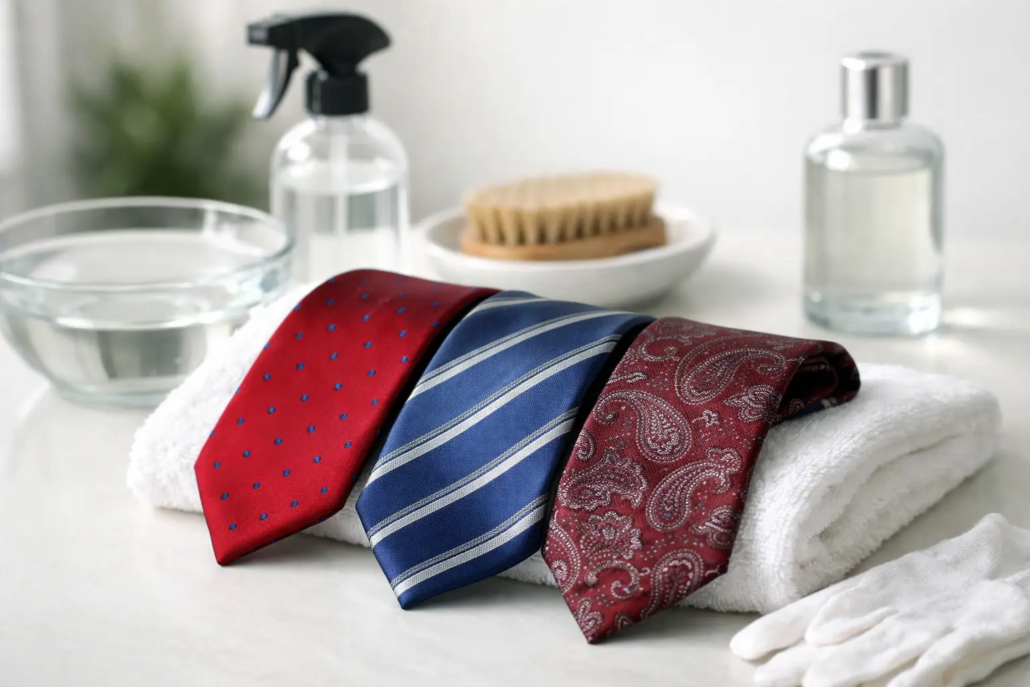
A silk tie can pull together a work suit, wedding look, or Sunday best outfit in seconds. One drop of coffee can do the opposite just as quickly. Knowing how to clean silk ties means recognizing that silk is not like a cotton dress shirt: the fabric, dyes, lining, and hand-finished shape all need a lighter touch.
The safest rule is simple: treat a spot immediately, use as little moisture as possible, and leave major stains to a professional cleaner. A careful response can save a favorite tie. An aggressive scrub, a soak in the sink, or a trip through the washing machine can leave permanent water rings, faded color, or a twisted blade.
Why silk ties need special care
Most quality silk ties are made from multiple layers. The silk face fabric gives the tie its rich color and subtle sheen, while an inner lining helps it drape and knot properly. Moisture can affect each layer differently. The outer silk may spot or lose dye, while the lining can shrink, bunch, or show through as ripples.
Silk is also sensitive to friction. Rubbing a stain may rough up the fibers, creating a dull patch that stands out even after the stain is gone. This is why the familiar instinct to scrub with a wet paper towel is often what causes the lasting damage.
Before you do anything, check the care label if your tie has one. Many silk ties are labeled dry clean only, and that is the best recommendation for broad stains, set-in spots, or a tie with sentimental or high-dollar value. At-home care is best reserved for fresh, small surface marks.
How to clean silk ties at home for fresh stains
Start by removing the tie and laying it flat on a clean, dry towel. Do not leave a fresh spill folded into the knot or tucked under a jacket. The longer liquid sits, the greater the chance it moves into the lining.
Blot first, never rub
Use a clean white cloth, plain white paper towel, or cotton handkerchief to gently blot the affected area. Work from the outside of the stain toward the center so it does not spread. Press lightly, lift, and repeat with a dry section of cloth.
Avoid colored napkins or printed paper towels. Their dye can transfer to wet silk, turning a small stain into a much bigger problem.
Handle the stain based on what caused it
A little restraint goes a long way. These approaches are appropriate for common fresh spills, but always test a hidden area on the back of the narrow end first if moisture is involved.
- Water or clear drinks: Blot promptly, then let the tie dry flat at room temperature. Even plain water can leave a ring if the area gets soaked.
- Coffee, soda, or juice: Blot up as much as possible. Lightly dab the area with a white cloth barely dampened with distilled water, then blot dry. Do not saturate the silk.
- Oil, gravy, or salad dressing: Blot excess oil without pressing it deeper into the fabric. Cover the spot with cornstarch or talcum powder and let it sit for several hours or overnight. Brush away gently with a soft, dry brush.
- Food residue: Lift off solids with the edge of a spoon or a dull knife before blotting. Do not scrape at the weave.
- Ink, makeup, wine, or dark sauces: Skip home remedies and take the tie to a cleaner that handles silk. These stains can spread quickly or react badly with cleaning products.
If a spot remains after gentle blotting, stop rather than escalating to stronger products. A professional may have a better chance of removing the stain when the silk has not been treated with several household cleaners first.
Use distilled water sparingly
If you need moisture for a small water-based stain, distilled water is a better choice than tap water because it is less likely to leave mineral residue. Dampen the cloth, not the tie. The cloth should feel nearly dry to the touch.
Dab very lightly, then immediately blot with a dry white cloth. Let the tie dry flat and naturally. Do not use a hair dryer, set it in direct sun, or hang it over a radiator. Fast heat can shrink the lining or cause the tie to lose its smooth shape.
What not to use on a silk tie
The quickest way to ruin silk is to treat it like everyday laundry. Never machine wash or tumble dry a silk tie. Hand-washing is also risky because even a brief soak can cause dye bleeding, puckering, and water marks.
Avoid bleach, stain sticks, laundry detergent, dish soap, vinegar, club soda, and pre-moistened cleaning wipes. These products are often recommended as general stain solutions, but their ingredients, moisture level, or pH can change the color and finish of silk. Rubbing alcohol can also leave a visible ring or pull color from the fabric.
Skip steam-cleaning the tie as a stain solution. While light steam can sometimes help relax minor wrinkles, too much heat and moisture can distort the lining. If the tie is badly wrinkled, a professional press is the safer option.
When to take a silk tie to the cleaner
Professional cleaning is worth it when the stain is obvious, oily, colorful, or already dry. It is also the right call for a wedding tie, a favorite designer piece, a vintage tie, or any tie with delicate jacquard texture, embroidery, beading, or hand-painted details.
Tell the cleaner what caused the stain and whether you used anything on it at home. That information helps them choose the right treatment. If possible, select a cleaner experienced with fine garments rather than assuming every dry cleaner handles silk ties the same way.
There is a trade-off: professional cleaning costs more than a quick at-home attempt, and no cleaner can guarantee removal of every set-in stain. Still, it is usually less expensive than replacing a tie that has been permanently marked by aggressive spot treatment.
Drying and reshaping after spot cleaning
After blotting, lay the tie flat on a clean towel with the stained section facing up. Keep it out of direct sunlight and allow plenty of time to air dry. Do not hang a wet tie, since the added weight of moisture can stretch the fabric and pull the lining out of alignment.
Once dry, inspect the area under natural light. If the fabric looks stiff, shiny, lighter in color, or ringed at the edges, do not keep treating it. Those signs suggest the silk has reacted to moisture or friction, and further cleaning may make the difference more noticeable.
If the tie looks slightly creased after drying, roll it loosely around your hand, beginning at the narrow end, and leave it overnight. This can help the fabric relax without direct heat.
Prevent stains before they happen
A little routine care keeps silk ties looking sharp longer. Untie your tie at the end of the day instead of pulling the narrow end through the knot. Reverse the steps you used to tie it, then hang it on a tie rack or roll it loosely for storage. This protects both the silk and the lining from permanent creases.
For meals, especially at weddings, business dinners, and holiday events, consider a tie bar to keep the tie close to the shirt. It will not make a tie stain-proof, but it can keep the blade from dropping into a plate or brushing across a drink. Carrying a clean white handkerchief is also a smarter emergency tool than grabbing the nearest restaurant napkin.
Rotating your ties helps as well. Giving a silk tie a day or two to rest after wear allows the fibers and knot area to recover their shape. For affordable silk options built for workdays, celebrations, and coordinated looks, Tie One On makes it easy to keep more than one polished choice in the rotation.
A silk tie is meant to be worn, not hidden away for fear of a spill. Treat small accidents gently, choose professional help when the stakes are high, and your signature tie can stay ready for the next meeting, ceremony, or memorable night out.



Leave a Reply
Want to join the discussion?Feel free to contribute!