

Wedding Tie Etiquette Guide for Grooms and Guests
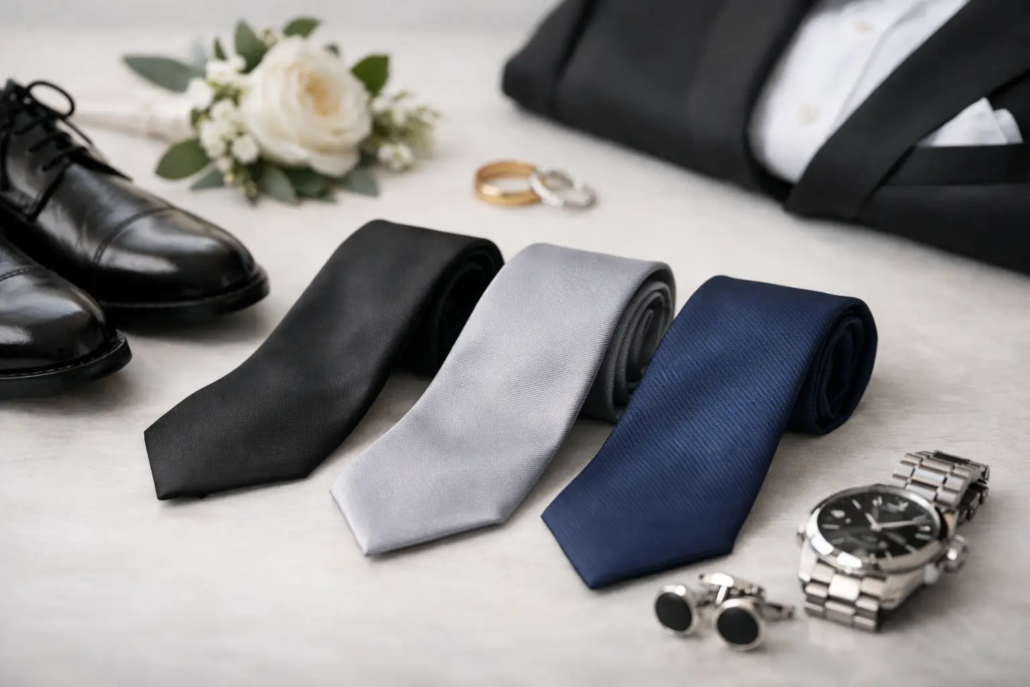
A wedding tie can look like a small decision until the photos arrive. The wrong width, sheen, or color can make an otherwise sharp suit feel out of place beside the wedding party. This wedding tie etiquette guide makes the choice simpler, whether you are the groom, a groomsman, the father of the bride, or a guest who wants to show up looking properly prepared.
The basic rule is simple: your tie should respect the couple’s level of formality and fit the role you have been given. From there, fabric, color, pattern, and finishing details do the work.
Start With the Wedding Dress Code
Before choosing a color, read the invitation and any details on the wedding website. A tie should support the dress code, not compete with it. If the invitation is vague, consider the venue, time of day, and season. An evening ballroom reception calls for a different look than an afternoon ceremony at a mountain lodge.
For black-tie weddings, a black self-tie bow tie is the traditional choice with a tuxedo. A pre-tied bow tie can be practical, but a properly tied bow has a softer, more natural shape. Skip a long necktie unless the couple has specifically requested one. A black bow tie with a white formal shirt, black tuxedo, and polished black shoes is the dependable standard.
Formal or black-tie-optional weddings give you more room. A tuxedo and black bow tie still work beautifully, while a dark navy, charcoal, or black suit with a refined silk necktie is also appropriate. Choose a solid tie, a subtle texture, or a quiet pattern such as a small geometric design. This is not the moment for novelty prints or loud contrast.
For cocktail and semi-formal weddings, a suit and necktie are usually the safest choice. Rich solid colors, tasteful stripes, paisleys, and textured weaves all fit well. A bow tie can work too, especially for a garden, vintage-inspired, or creative venue, but it should look intentional rather than costume-like.
At casual weddings, do not assume a tie is unnecessary. The invitation may say casual while the couple still expects collared shirts, slacks, and coordinated accessories. A knit tie, cotton tie, subtle floral print, or less formal bow tie can add polish without looking overdressed. If the invitation says no tie, follow that direction and focus on a crisp shirt and a well-fitted jacket if appropriate.
Wedding Tie Etiquette for Each Role
The groom
The groom should look distinct, but not disconnected from the wedding party. That may mean wearing the same color family as the groomsmen in a more elevated fabric, selecting a different pattern, or adding a coordinating pocket square and tie bar. If groomsmen wear matte sage ties, for example, the groom might wear a sage silk tie with a subtle texture.
A groom’s tie should also work with the bride’s gown and the overall visual plan. Bright white, ivory, champagne, and blush all photograph differently, so do not assume every white accessory coordinates. When possible, compare the tie and pocket square to the wedding colors in natural light.
Groomsmen
When the couple specifies a tie, wear that tie. Even a close substitute can stand out in group photos because color, texture, and width vary more than most people expect. Order early, especially when several men need matching ties or extra-long sizes.
If the couple gives you a color but not an exact item, ask whether they prefer solid, patterned, matte, or satin. A navy tie can range from nearly black to bright royal blue, and that difference matters beside matching dresses. Keep the width consistent across the group as well. Traditional ties, generally around 3 to 3.25 inches wide, are the most versatile choice for most suits and body types.
Fathers and close family
Fathers should look polished and coordinated without being mistaken for groomsmen. A related color palette is usually better than an exact match. If the wedding party wears burgundy, a father of the bride could wear a deep wine, navy, or patterned tie with burgundy accents.
This is also a good place for classic fabrics and conservative patterns. Silk ties, small-scale prints, and understated stripes offer personality while keeping attention where it belongs.
Wedding guests
Guests have the most freedom, along with one responsibility: do not outdress the couple or ignore the stated attire. A well-fitted suit, dress shirt, and tie will cover most weddings. For a daytime celebration, lighter blues, soft greens, dusty rose, warm neutrals, and restrained prints can look excellent. For evening, lean into deeper tones such as navy, forest green, burgundy, plum, and charcoal.
Avoid wearing the exact colors assigned to the wedding party if you know them, particularly when the look is a bold solid tie. You do not want to spend the reception explaining that you are not part of the group photos.
Match Color Without Trying to Match Everything
A coordinated outfit is not the same as a perfectly matched outfit. Your tie does not need to match your date’s dress exactly, and it usually looks better when it does not. Instead, choose a shade that complements the color. A navy dress pairs well with burgundy, silver, soft pink, or patterned blue. A green dress can work with navy, gold, rust, or a floral tie that includes a touch of green.
For wedding-party coordination, exact matching often matters more. If the bride or planner has supplied a swatch, use it. Digital screens alter color, and names such as “dusty blue” or “terracotta” can cover a wide range of shades.
Consider the suit before settling on the tie. Navy suits are flexible and look sharp with burgundy, green, gold, silver, and most shades of blue. Charcoal suits pair naturally with silver, deep red, navy, and plum. Black suits call for more restraint, particularly at formal evening weddings. Tan and light gray suits are ideal for spring and summer celebrations, where soft blues, sage, coral, and muted floral patterns feel at home.
Choose the Right Tie Fabric, Width, and Pattern
Silk remains the most reliable wedding tie fabric because it has a polished finish and drapes cleanly. A satin silk tie brings more shine and suits formal evening events. A matte silk, grenadine, or textured weave feels slightly more relaxed while still looking refined.
Tie width should relate to your lapels and build. A traditional-width tie is the easiest choice with standard suit lapels. Skinny ties can work with slim suits and modern casual weddings, but an extremely narrow tie may look dated or disproportionate in formal photos. Extra-long ties are worth choosing when needed. A tie should reach the waistband or belt buckle area after it is tied, not stop above it.
Patterns need a little judgment. If your shirt is solid, you can wear a patterned tie. If your shirt has a check or stripe, choose a tie pattern at a noticeably different scale or select a solid. Small patterns are generally easier to wear than large, high-contrast designs. For the wedding party, consistency looks cleaner than letting every groomsman choose a different print.
Finish the Look With Intentional Details
The tie knot should fit the collar and the tie fabric. A four-in-hand knot is slightly narrow and relaxed, making it a strong choice for most standard collars and textured ties. A half-Windsor creates a balanced, polished shape that works for many weddings. A full Windsor is broader and best with a spread collar and a substantial tie fabric.
Aim for a small dimple just below the knot. It gives the tie dimension and keeps the knot from looking flat. Make sure the narrow end is tucked into the keeper loop and the tie is centered beneath the collar.
A tie bar is optional, but it can be a clean finishing touch. Place it between the third and fourth shirt buttons, and keep it narrower than the tie itself. It should clip the tie to the shirt placket, not simply sit across the fabric. Cuff links, pocket squares, suspenders, and lapel pins can also add character, but not all at once. Choose one or two accessories that support the outfit.
Plan Ahead for Comfort and Photos
Try on the complete outfit before the wedding day, including the shirt, jacket, belt, shoes, and tie. This is the easiest way to catch a collar that is too tight, a tie that is too short, or colors that do not look right together. If you are part of a group, confirm that everyone has the same requested style well before the event.
Bring a backup tie if you are traveling or serving as a groomsman. Coffee spills, makeup marks, and last-minute wardrobe problems happen. A spare is a small piece of insurance that can save a photo schedule.
The best wedding tie is not necessarily the boldest or most expensive one. It is the one that fits the occasion, coordinates with confidence, and lets you spend the day focused on the people getting married. Choose it with care, tie it well, and let the rest of the celebration take center stage.



Leave a Reply
Want to join the discussion?Feel free to contribute!