

Wedding Tie Color Examples for Every Dress Code
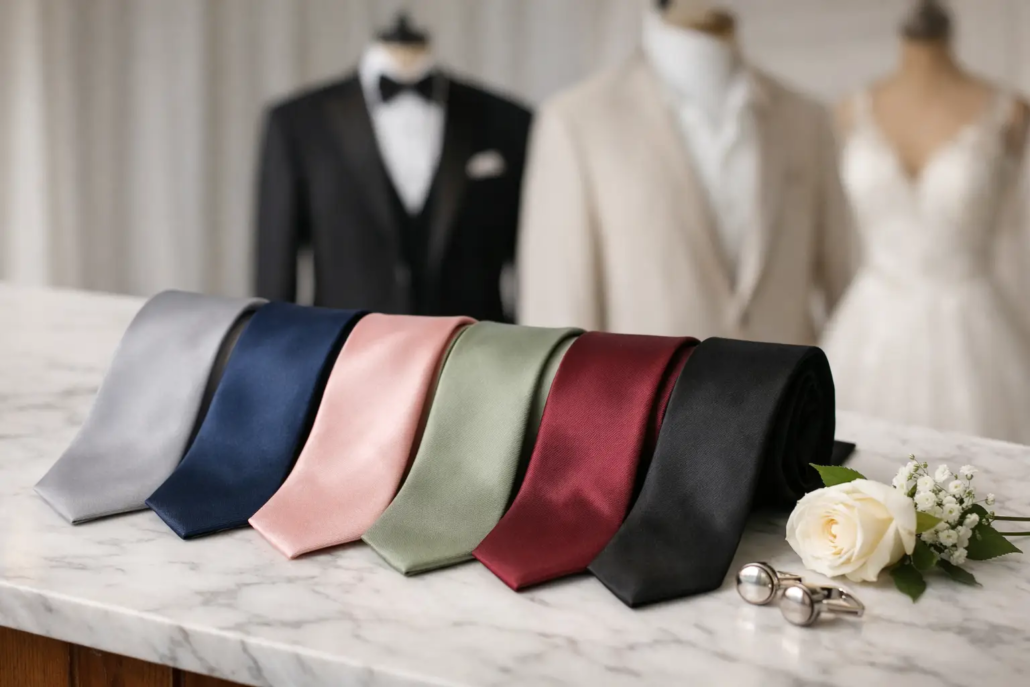
A wedding tie has one job: make the suit look intentional. That sounds simple until you are standing in front of a navy, charcoal, or tan suit trying to coordinate with bridesmaid dresses, flowers, the venue, and a dress code that says “formal” but leaves plenty open to interpretation. These wedding tie color examples make the decision easier, whether you are the groom, a groomsman, a father of the bride, or a guest who wants to show up looking sharp.
The best choice is rarely about matching every wedding detail exactly. It is about choosing a color that works with your suit, fits the level of formality, and supports the wedding palette without turning your outfit into a costume.
Wedding Tie Color Examples by Suit Color
Start with the suit. It is the largest color in your outfit, so it should guide the tie choice before the invitation palette does.
Navy suit: burgundy, blush, sage, and silver
A navy suit is one of the most flexible wedding options available. For a classic evening look, choose a burgundy or deep wine tie. The contrast is rich without being loud, and it works especially well for fall and winter celebrations.
For spring weddings, blush, dusty rose, sage green, and soft blue ties pair naturally with navy. These colors feel lighter while still looking polished. A silver or light gray tie is another dependable choice for a formal church wedding, ballroom reception, or black-tie-optional event.
If the wedding party is wearing navy suits, identical ties can create a unified look. The groom can stand apart with a different texture, such as a silk tie while the groomsmen wear matte ties in the same color family.
Charcoal suit: ivory, burgundy, dusty blue, and black
Charcoal is refined and slightly more formal than navy, so it works beautifully for evening weddings. Burgundy is a standout pairing, bringing warmth to the cool gray suit. Dusty blue is another strong option, particularly when the bridesmaid palette includes slate, blue, or lavender tones.
For a very formal event, a black silk tie with a crisp white dress shirt keeps the look clean and traditional. An ivory, champagne, or silver tie can also work well, but choose the shade carefully. Very pale ties need enough contrast against the shirt to avoid looking washed out in photographs.
Black suit: black, silver, jewel tones, and deep neutrals
A black suit gives you the clearest route to formal dressing. A black tie is the obvious choice for black tie, black-tie-optional, or evening weddings with a more traditional feel. If the invitation calls for a tuxedo, wear a black bow tie rather than a standard necktie.
For a suit-based wedding look, silver, charcoal, deep emerald, plum, and burgundy can all look excellent against black. Jewel tones are especially effective for fall and winter weddings because they hold their own next to a dark suit. Avoid bright neon shades or overly casual novelty patterns – black makes those choices look even louder.
Light gray suit: navy, lavender, coral, and floral accents
Light gray suits are popular for warm-weather weddings because they feel relaxed without losing their dressy appeal. Navy ties create a crisp, timeless contrast. Lavender, dusty blue, soft pink, and muted coral are reliable choices for spring and summer.
A subtle floral tie can also look right with light gray, especially at a garden, vineyard, or outdoor wedding. Keep the pattern controlled. A small floral print or a tonal design is easier to wear than a large, high-contrast pattern that competes with the rest of the outfit.
Tan or beige suit: sage, rust, navy, and soft blue
Tan and beige suits belong at outdoor, beach, destination, and daytime weddings. Sage green works particularly well because it feels connected to natural surroundings while still offering contrast. Rust, terracotta, burnt orange, and cinnamon shades are excellent for fall weddings and desert venues.
For a coastal or summer ceremony, choose navy, light blue, or a muted floral pattern. Skip very dark black ties with tan suits unless the event is unusually formal. The contrast can feel too severe for the easygoing character of a lighter suit.
Match the Wedding Palette Without Matching Everything
Many groomsmen are asked to wear a tie that coordinates with bridesmaid dresses. Coordinating does not always mean finding the exact same shade. In fact, exact matching can look flat in photos, especially with colors like blush, dusty blue, or sage.
A better approach is to work within the same color family. If the bridesmaids wear dusty blue, the men can wear a slightly deeper steel blue, slate blue, or textured navy tie. If the dresses are terracotta, a rust, cinnamon, or deep burgundy tie may look more balanced than a bright orange match.
The same principle applies to floral colors. Pull one secondary color from the bouquet or table settings rather than trying to copy the full arrangement. A burgundy tie may be the right answer for a wedding with blush flowers, greenery, and dark red accents, even if burgundy is not the main color on the invitation.
Choose Tie Color for the Season and Venue
The season is useful, but the venue should have equal influence. A November wedding in a sunlit barn calls for different choices than a November wedding in a downtown hotel ballroom.
For spring, consider sage, light blue, blush, lavender, and soft floral prints. Summer weddings suit sky blue, navy, coral, pale pink, and lighter greens. These colors look comfortable in daylight and pair well with lighter gray, blue, and tan suits.
Fall is the natural home for burgundy, rust, mustard, forest green, plum, and dark navy. These tones add depth without requiring a heavy suit. Winter events tend to favor black, charcoal, silver, emerald, deep red, midnight blue, and richer textures such as silk or velvet bow ties.
A beach wedding usually calls for a softer palette and a lighter-weight look. A formal ballroom wedding can handle darker ties, cleaner solids, and more shine. At a rustic venue, a knit tie, textured solid, or small pattern can add personality, provided the dress code is not strictly formal.
Solid, Patterned, or Textured: What Looks Best?
A solid tie is the safest choice when the wedding party needs a uniform appearance. It photographs well, is easy to coordinate, and works with nearly any suit. If the bridesmaid dresses, floral arrangements, or pocket squares already include a lot of visual detail, a solid tie keeps the group from looking busy.
Patterned ties are a great choice for guests, grooms, or smaller wedding parties that want a little more personality. Small dots, subtle stripes, paisley, and restrained floral prints all work. The pattern should include colors already present in the outfit, such as navy, gray, burgundy, or the wedding accent color.
Texture is the middle ground. A grenadine-style weave, matte finish, knit tie, or tonal jacquard adds interest without introducing another color. This is especially useful when everyone needs to wear the same shade but the groom wants a slightly elevated version of the look.
Do Not Forget the Shirt and Pocket Square
A white dress shirt is the most dependable wedding choice because it lets the tie color read clearly. Light blue shirts can work with navy, gray, or tan suits, but they require more careful tie coordination. If you are unsure, choose white.
Pocket squares should complement the tie, not duplicate it. A burgundy tie with a burgundy pocket square can look overly matched. Instead, use a white pocket square, or choose one with a small amount of burgundy alongside other neutral colors. The same rule applies to boutonnieres: let the flower be the accent rather than another item you try to match exactly.
For groomsmen, make sure neckties and bow ties are available in the same or closely coordinated shades if members of the party have different preferences. A comfortable, confident groomsman looks better than one tugging at a tie style he never wears.
The right wedding tie color should feel like it belongs in the room and still feels like you. If you need help narrowing down the options, Tie One On offers the selection and formalwear know-how to make coordinating a wedding party far less complicated – and far more polished.



Leave a Reply
Want to join the discussion?Feel free to contribute!