

How to Match Tie and Pocket Square
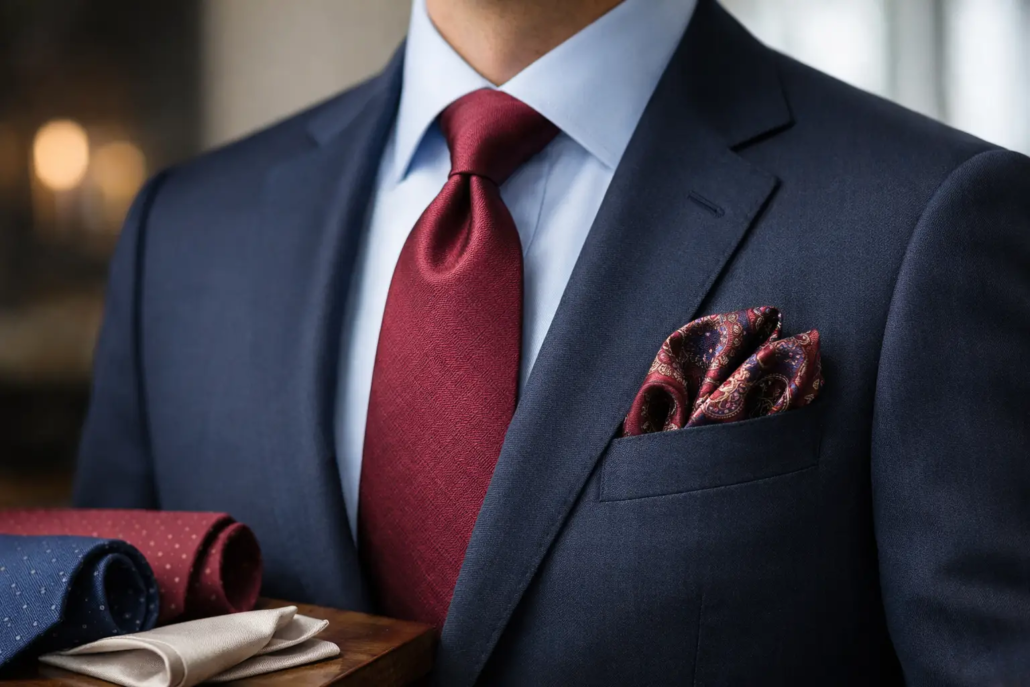
If you have ever put on a tie, added a pocket square, looked in the mirror, and thought something felt off, you are not alone. Knowing how to match tie and pocket square is less about memorizing fashion rules and more about creating balance. The goal is a coordinated look that feels polished, not forced.
A lot of men make the same mistake right away – they assume the tie and pocket square need to be identical. In most cases, they should not. Matching too perfectly can make an outfit look overly staged, like it came straight off a display mannequin. A better approach is to let the two pieces relate to each other through color, pattern, or fabric while still giving each one room to stand on its own.
How to Match Tie and Pocket Square Without Looking Overdone
The easiest way to build a strong combination is to start with the tie and let the pocket square support it. Your tie usually takes up more visual space and sets the tone of the outfit, especially in business settings, weddings, church, and other dressed-up occasions. Once the tie is chosen, the pocket square can add contrast, echo a color, or soften the overall look.
Think of your outfit as a conversation between pieces, not a copy-and-paste job. If your tie is bold, your pocket square should usually be quieter. If your tie is solid and simple, the pocket square can do a little more work. That balance is what makes the outfit look intentional.
A navy tie with a white pocket square is a classic example. It works because it is clean, versatile, and appropriate almost anywhere. A burgundy tie with a pocket square that includes a small burgundy accent can also work well because the colors connect without becoming an exact set. On the other hand, a burgundy paisley tie with the exact same burgundy paisley square often feels too matched.
Start with Color First
Color is the first thing the eye picks up, so it should be your first checkpoint. The simplest rule is this: your pocket square should complement your tie, not duplicate it.
A white pocket square is the most dependable option in menswear because it works with almost every tie color and nearly every shirt and suit combination. If you want one square that can handle weddings, interviews, business meetings, and formal dinners, white is hard to beat. It looks crisp with navy, gray, black, charcoal, tan, and even brighter seasonal suits.
If you want more personality, pull one secondary color from the tie rather than the dominant one. For example, if your tie is navy with small light blue dots, a light blue pocket square or a square with hints of blue can tie the look together nicely. If your tie is green with a subtle gold pattern, a pocket square with a touch of gold or cream can sharpen the outfit without fighting for attention.
The trade-off is that stronger color combinations require a little more care. A bright tie and a bright pocket square can work for celebrations or spring events, but the outfit can tip into busy fast. If both pieces are vivid, one of them should be simpler in pattern and texture.
Pattern Matters More Than Most Men Think
Once the colors make sense, pattern is what keeps the outfit from looking flat or chaotic. A useful rule is to vary the scale and type of pattern between the tie and pocket square.
If your tie is solid, you have plenty of freedom. You can wear a patterned pocket square, a textured square, or a simple white linen fold. A solid tie acts as a stable base, which is why it is such a practical choice for men building a versatile wardrobe.
If your tie has a pattern, your pocket square should either be solid or feature a different pattern scale. A large floral tie can work with a small dotted square. A striped tie can work with a paisley or geometric square, provided the colors connect and the pattern sizes are not competing at the same volume.
This is where many outfits go wrong. A medium-scale plaid tie with a medium-scale plaid pocket square in similar colors tends to blur together. The pieces are too similar to create contrast and too different to look intentionally matched. When in doubt, simplify the square.
Fabric Changes the Feel
When men ask how to match tie and pocket square, they often focus only on color and pattern. Fabric matters just as much because it affects the level of formality.
Silk ties and silk pocket squares look refined and dressy, making them strong options for weddings, date nights, holiday parties, and formal events. Linen and cotton pocket squares look a little more relaxed and are especially sharp with textured ties, sport coats, and daytime outfits. Wool ties pair nicely with cooler-weather fabrics and can look excellent with more substantial pocket squares in fall and winter.
The pieces do not need to be made from the exact same material, but they should make sense together. A shiny satin tie with a very casual cotton square can feel mismatched. A matte wool tie with a lightly textured linen square usually feels more natural. The more formal the event, the cleaner and more refined your fabrics should be.
Dress for the Occasion, Not Just the Mirror
A great combination for a wedding guest is not always the right combination for the office. Occasion should guide how expressive you get.
For business and professional wear, keep things restrained. Solid ties, small neat patterns, and white or lightly accented pocket squares are reliable. You want to look put together, not theatrical. Navy, burgundy, gray, and dark green all perform well here because they project confidence without trying too hard.
For weddings and celebrations, you can stretch more. This is where floral patterns, richer colors, and more noticeable pocket squares often fit naturally. Seasonal color can help too. Lighter blues, blush tones, and soft patterns work well in spring and summer. Deeper jewel tones and richer textures feel right in fall and winter.
For church, school events, family gatherings, and gifting, versatility usually wins. A tie and square combination that feels sharp but not extreme gives you more repeat wear. That is where affordable luxury really pays off – you can build multiple polished looks without needing an oversized budget.
Easy Pairings That Rarely Miss
Some combinations keep working because they are simple, balanced, and flexible. A navy tie with a white pocket square is the standard for a reason. A gray tie with a white or silver-accented square feels modern and clean. A burgundy tie with a white square that picks up a subtle burgundy detail offers color without looking busy.
If you want more personality, try a patterned navy tie with a pocket square that draws out one of the smaller colors in the pattern. A forest green tie can pair nicely with cream, white, or a square with restrained gold accents. A black tie with a crisp white linen square remains a strong formal option.
These combinations work because they leave visual breathing room. They do not ask every item in the outfit to speak at once.
When Matching Sets Work
There is one exception worth mentioning. Tie and pocket square sets can be helpful when you need a fast, coordinated option for a wedding party, special event, or gift. They take some of the guesswork out of dressing, especially for shoppers who want a polished look without building a combination from scratch.
Even then, it helps if the set is designed with some variation in texture, fold, or pattern placement so the look does not feel too exact. If you are wearing a true matching set, keep the rest of the outfit clean. A crisp shirt, well-fitted jacket, and simple accessories will keep the outfit sharp.
The Small Details That Pull It Together
The pocket square fold changes the mood of the outfit. A flat presidential fold looks neat and professional. A puff fold feels softer and a little more relaxed. More elaborate folds can be fun for weddings or special occasions, but they are not always necessary. Often, a simple fold looks the most confident.
Your shirt matters too. A white shirt gives you the most flexibility because it creates a clean background for both tie and square. Light blue shirts are another strong option, especially with navy, burgundy, or patterned ties. If your shirt already has a strong pattern, be more careful with the tie and square so the outfit does not become crowded.
And fit still beats accessories every time. A well-fitted jacket and properly sized tie will do more for your appearance than an overly clever pocket square pairing. Accessories should finish the look, not rescue it.
Learning how to match tie and pocket square gets easier once you stop trying to make everything match exactly. Aim for connection, not duplication. Choose one piece to lead, let the other support it, and dress for the occasion in front of you. If you keep that in mind, getting dressed stops feeling complicated and starts feeling like the easiest part of looking sharp.



Leave a Reply
Want to join the discussion?Feel free to contribute!